Introduction to the Rivalry
The rivalry between Bayern Munich and borussia dortmund, often referred to as "Der Klassiker," is one of the most electrifying and significant fixtures in German football. While it may not have the century-old history of clashes like El Clásico or the Old Firm derby, its modern prominence has made it a centerpiece of the Bundesliga and a symbol of the shifting dynamics in German football. This section delves into the origins and evolution of this rivalry, emphasizing its role in shaping the narrative of German football on both domestic and international stages.
The roots of this rivalry can be traced back to the 1990s, a period when Borussia Dortmund emerged as a genuine contender to Bayern Munich's dominance. Prior to this era, Bayern had established itself as the preeminent force in German football, winning multiple Bundesliga titles and European trophies. Dortmund, while a respected club with a strong local following, was not yet seen as a perennial challenger. However, under the management of Ottmar Hitzfeld, Dortmund began to assert itself. Their Bundesliga title wins in 1995 and 1996, followed by their UEFA Champions League triumph in 1997, signaled a seismic shift. For the first time, Bayern faced a domestic rival capable of not only competing for titles but also capturing the imagination of fans across Germany and beyond.
This period laid the foundation for what would become a defining feature of the rivalry: the contrast in identity and approach. Bayern Munich, based in the affluent Bavarian capital, has long been associated with financial power, institutional stability, and a knack for attracting top talents both domestically and internationally. Dortmund, by contrast, represents a different ethos—a club deeply rooted in the industrial Ruhr region, characterized by a working-class spirit and a reputation for developing young players. This dichotomy is not merely anecdotal; it reflects broader societal and economic contrasts within Germany, making matches between the two clubs resonate on a cultural level.
The rivalry intensified in the early 2010s, a golden era for Der Klassiker. Dortmund, under the stewardship of Jürgen Klopp, introduced a high-intensity, pressing style of play that took the Bundesliga by storm. Between 2010 and 2012, Dortmund won back-to-back Bundesliga titles, breaking Bayern's stranglehold on the league. Their 2012 league victory was particularly significant, as it came at a time when Bayern was undergoing a period of transition. Moreover, Dortmund's 5-2 thrashing of Bayern in the 2012 DFB-Pokal final was a statement of intent, showcasing their ability to not only compete but also dominate their rivals on the biggest stages.
However, Bayern's response to this challenge was swift and emphatic. The club adopted a strategy of not just strengthening itself but also weakening Dortmund by signing key players such as Mario Götze in 2013 and Robert Lewandowski in 2014. This approach, often criticized as predatory, underscored the power imbalance between the two clubs but also highlighted the stakes of their rivalry. Dortmund's financial limitations compared to Bayern's vast resources became a recurring theme, with the latter often leveraging its economic might to maintain its edge. This dynamic has fueled debates about the sustainability of competition in the Bundesliga, with some critics suggesting that the rivalry, while thrilling, also exposes structural inequalities in German football.
The international dimension of this rivalry cannot be overlooked. Both clubs have been standard-bearers for German football in Europe. Bayern's consistent presence in the latter stages of the Champions League contrasts with Dortmund's sporadic but impactful appearances, such as their run to the 2013 final. Matches between the two often serve as a barometer of German football's health on the continental stage. A strong showing by either club against the other is seen as a statement not just for domestic bragging rights but also for the Bundesliga's standing among Europe's top leagues.
Beyond the tactical and financial aspects, the emotional intensity of Der Klassiker is fueled by the fans. The Yellow Wall at Dortmund's Signal Iduna Park and the passionate supporters at Bayern's Allianz Arena create an atmosphere that is unparalleled in German football. These fans view the rivalry not just as a contest between two teams but as a battle for identity and pride. For Dortmund fans, beating Bayern is a way to assert their club's relevance in the face of economic disparities. For Bayern supporters, defeating Dortmund reinforces their club's status as the unassailable leader of German football.
The rivalry has also produced iconic moments that have entered football folklore. Matches like the 2013 Champions League final at Wembley, where Bayern triumphed 2-1 over Dortmund, are etched in the memories of fans. This was more than a victory for Bayern; it was a demonstration of their ability to rise above their fiercest domestic competitor on the biggest stage. For Dortmund, the loss was a bitter pill, but it also reinforced their role as a worthy adversary, capable of pushing Bayern to their limits.
Statistically, the numbers tell a story of Bayern's dominance. Since the inception of the Bundesliga, Bayern has won far more titles and head-to-head matches than Dortmund. However, this numerical superiority belies the emotional and symbolic weight of their clashes. Dortmund's occasional victories, such as their 3-2 win in 2018 or their 4-2 triumph in 2021, serve as reminders that the rivalry is far from one-sided in spirit, even if the scales often tip in Bayern's favor.
The modern iteration of Der Klassiker is also shaped by the globalized nature of football. With both clubs boasting international fanbases and featuring players from across the globe, their matches are now watched by millions worldwide. This global audience has elevated the rivalry beyond Germany, making it a showcase of the Bundesliga's best. For sponsors, broadcasters, and the league itself, Bayern vs. Dortmund is a marquee event that drives interest and revenue.
In summary, the rivalry between Bayern Munich and Borussia Dortmund is more than a series of high-stakes matches; it is a microcosm of German football's evolution. It embodies the tension between tradition and modernity, between financial might and grassroots spirit, and between regional pride and national ambition. While Bayern often represents the establishment, Dortmund symbolizes the underdog's fight, making their clashes a compelling narrative of David versus Goliath. As both clubs continue to shape the Bundesliga's future, their matches will remain a focal point for discussions about competition, identity, and the soul of German football.
Historical Performance Overview
The matches between Bayern Munich and Borussia Dortmund, often referred to as "Der Klassiker," have become one of the most anticipated fixtures in German football. This rivalry, while not as historically rooted as some others in European football, has grown into a spectacle of high stakes and intense competition over the past two decades. To understand the historical performance of these two teams in their head-to-head clashes, we must delve into key statistics, outcomes, and trends that have defined their encounters.
One of the first notable aspects of this rivalry is the dominance of Bayern Munich in recent years. Since the early 2010s, Bayern has consistently outperformed Dortmund in both the Bundesliga and domestic cup competitions. A review of their last 20 matches across all competitions reveals that Bayern has won approximately 60% of these games, with Dortmund securing about 25% of the victories, and the remaining 15% ending in draws. This trend underscores Bayern’s financial and squad depth advantages, which have allowed them to maintain a stranglehold on the Bundesliga title for much of this period. However, the outcomes are not merely a reflection of squad superiority; they also highlight specific tactical and psychological dynamics that have shaped the matches.
A deeper look at the goal-scoring patterns between the two teams provides fascinating insights. Historically, matches between Bayern and Dortmund tend to be high-scoring affairs. Over the last decade, the average goals per game in their encounters hovers around 3.5, significantly higher than the Bundesliga average of 2.8 goals per game. This trend points to the attacking philosophies both teams have embraced. Dortmund, under managers like Jürgen Klopp and later Thomas Tuchel, adopted a high-pressing, counter-attacking style that often yielded early goals. Bayern, in contrast, has leaned on possession-based play and clinical finishing, particularly under managers such as Pep Guardiola and Hansi Flick. A standout example of this dynamic occurred in the 2013 DFB-Pokal final, where Bayern triumphed 2-1 in extra time. While the scoreline suggests a tight contest, the match was marked by Dortmund’s aggressive pressing in the first half and Bayern’s eventual control in the latter stages, exemplifying how both teams’ styles can lead to dramatic, seesawing contests.
Another critical aspect to consider is the impact of individual performances in shaping match outcomes. Several players have left indelible marks on this rivalry. Robert Lewandowski, who played for Dortmund from 2010 to 2014 before moving to Bayern, is a prime example. His performances against his former team have often been decisive. In the 2019-2020 season, for instance, Lewandowski scored a brace in a 4-0 Bayern victory, underscoring his ability to rise to the occasion in high-pressure games. Similarly, Dortmund’s Erling Haaland, during his tenure with the club, was a thorn in Bayern’s side. His brace in a 2-3 loss to Bayern in 2021 showcased Dortmund’s potential to challenge Bayern despite the eventual outcome. These individual battles not only add drama to the matches but also reveal how specific player duels—such as Lewandowski versus Mats Hummels or Manuel Neuer versus Marco Reus—can tilt the balance of power within 90 minutes.
The home and away performance disparity is another trend worth analyzing. Bayern Munich has often been more dominant at the Allianz Arena, with a higher win percentage and goal difference when playing at home. Dortmund, however, has occasionally managed to spring surprises at the Signal Iduna Park, fueled by the famous "Yellow Wall" of supporters. A memorable example is the 2018-2019 season, where Dortmund, then leading the Bundesliga table, hosted Bayern in a top-of-the-table clash. Dortmund emerged victorious with a 3-2 scoreline, a result that exemplified their ability to harness home-field energy. However, this trend is not absolute; Bayern has also secured key away wins, such as their 3-2 victory at Dortmund in the 2020-2021 season, which helped them extend their lead in the title race. These fluctuations suggest that while home advantage plays a role, the quality and form of the teams on the day often override it.
Standout moments in this rivalry also include high-stakes matches with league implications. One of the most dramatic encounters was the 2012 Bundesliga match at the Allianz Arena, where Dortmund clinched a 1-0 victory courtesy of a Robert Lewandowski goal. This win was pivotal in Dortmund securing back-to-back Bundesliga titles, marking a period where they managed to disrupt Bayern’s dominance. Such matches are not just about the statistics but also about their psychological impact. Dortmund’s ability to win in Munich during this period sent a clear message about their competitiveness, even if Bayern would later reassert their control in subsequent seasons.
The tactical evolution of both teams has also played a role in shaping match outcomes. Under Klopp, Dortmund was known for their "gegenpressing" system, which often disrupted Bayern’s build-up play. This approach led to some of Dortmund’s most memorable victories, including their 5-2 thrashing of Bayern in the 2012 DFB-Pokal final. However, as Bayern adapted under Guardiola and later Flick, their tactical flexibility—combining possession with rapid transitions—allowed them to neutralize Dortmund’s pressing. A clear example of this evolution was seen in the 2020 Supercup, where Bayern’s fluid positioning and quick counter-attacks led to a 3-2 win, despite Dortmund’s initial dominance in the first half. These tactical battles illustrate how both teams have had to innovate to maintain an edge in their rivalry.
In addition to the on-field action, the psychological weight of this fixture cannot be overlooked. For Dortmund, matches against Bayern are not just about points but also about asserting their relevance as a top-tier competitor in German football. For Bayern, these games often serve as a test of their dominance and a chance to reaffirm their status as the country’s premier club. This psychological dimension is evident in the way both teams approach Der Klassiker. Dortmund often plays with a sense of urgency and defiance, while Bayern exudes a calm confidence rooted in their historical success. This dynamic has produced some of the most emotionally charged matches in Bundesliga history, such as the 2019 encounter where Dortmund led 2-0 only to succumb to a 5-2 defeat, a result that highlighted Bayern’s mental fortitude.
Finally, we must consider the broader context of these matches within the Bundesliga landscape. The outcomes of Bayern-Dortmund clashes often have ripple effects on the title race. For instance, in the 2018-2019 season, Dortmund’s early-season lead was eroded partly due to their inability to secure points against Bayern. Conversely, in seasons where Bayern has dropped points against Dortmund, it has injected life into the title race, as seen in the 2011-2012 campaign. These matches are not isolated events but pivotal moments that can define the trajectory of an entire season.
In summary, the historical performance overview of Bayern Munich versus Borussia Dortmund reveals a rivalry characterized by high-scoring matches, tactical innovation, individual brilliance, and psychological stakes. While Bayern’s recent dominance is evident in the statistics, Dortmund’s moments of brilliance and resilience ensure that each encounter remains unpredictable and compelling. This dynamic interplay of trends and standout moments makes Der Klassiker a fixture that transcends mere competition, embodying the broader narrative of German football’s evolution.
Tactical Approaches of Both Teams
The tactical approaches of Bayern Munich and Borussia Dortmund in their head-to-head encounters have long been a fascinating study in contrasting philosophies and adaptive strategies. These two giants of German football often represent different ends of the tactical spectrum, with Bayern's structured dominance juxtaposed against Dortmund's high-energy, counter-attacking verve. This section delves into the typical strategies and formations employed by both teams, emphasizing how their approaches have evolved over time and how they adapt specifically for matches against one another.
Bayern Munich, under various managers like Pep Guardiola, Hansi Flick, and Julian Nagelsmann, has traditionally been a team that prioritizes possession-based football with a focus on controlling the midfield. Their default formation in recent years has been a 4-2-3-1 or a 4-3-3, with a heavy emphasis on width provided by their fullbacks and central overloads created by their midfield trio. In matches against Dortmund, Bayern often seeks to exploit the space behind Dortmund's high defensive line. This is achieved by deploying quick, technically gifted wingers like Serge Gnabry or Leroy Sané, who can stretch the field and deliver incisive through balls to a central striker—often Robert Lewandowski in past seasons or Harry Kane more recently. The key here is Bayern's ability to switch play quickly from one flank to another, forcing Dortmund's defense to shift laterally and create gaps for their attackers to exploit.
Another hallmark of Bayern's approach is their gegenpressing, a tactic that involves immediate pressure on the opponent after losing possession. This is particularly effective against Dortmund because of their tendency to play out from the back. Bayern's midfielders, such as Joshua Kimmich and Leon Goretzka, are adept at closing down passing lanes and forcing turnovers in dangerous areas. In head-to-head matches, this pressing often disrupts Dortmund's rhythm, especially when Dortmund attempts to build attacks through their central defenders and deep-lying playmakers like Jude Bellingham (before his departure) or Salih Özcan.
On the other hand, Borussia Dortmund's tactical identity has been more fluid and reactive, particularly in the post-Jürgen Klopp era. While Klopp's Dortmund was defined by their gegenpressing and direct counter-attacks, later managers like Lucien Favre and Edin Terzić have introduced a more measured approach. Dortmund often employs a 4-2-3-1 or a 3-4-3 in big matches, with the latter used to counter Bayern's wide play. The use of wingbacks, such as Raphaël Guerreiro or Thomas Meunier, allows Dortmund to maintain numerical superiority in midfield while also providing outlets for quick transitions. This formation enables Dortmund to congest the central areas, making it harder for Bayern to dominate through the middle, while also giving them the flexibility to launch rapid counter-attacks down the flanks.
A critical aspect of Dortmund's strategy in these matches is their reliance on rapid verticality. Unlike Bayern's patient build-up, Dortmund often looks to bypass the midfield with long diagonal balls to their pacy forwards, such as Karim Adeyemi or Donyell Malen. This tactic is particularly effective when Bayern's fullbacks are caught high up the pitch, as it allows Dortmund to exploit the space left behind. Additionally, Dortmund's use of a false nine or a mobile striker like Sébastien Haller can pull Bayern's center-backs out of position, creating opportunities for late-arriving midfielders or inverted wingers to exploit the vacated spaces. This dynamic was evident in several matches where Dortmund's midfield runners, such as Marco Reus or Jude Bellingham, made untracked runs into the box to score or assist.
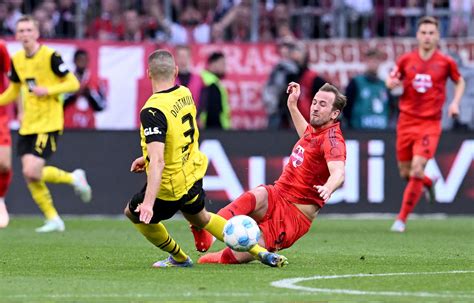
One of the most intriguing aspects of these encounters is how both teams adapt their defensive setups. Bayern, despite their attacking prowess, often employs a mid-block against Dortmund to avoid being exposed by their opponent's speed. This is a departure from their usual high defensive line, as they recognize the risk of leaving space for Dortmund's forwards to run into. Meanwhile, Dortmund tends to adopt a low-to-medium block when playing Bayern, particularly in away fixtures at the Allianz Arena. This is a pragmatic response to Bayern's overwhelming possession stats; rather than pressing high and risking being overrun, Dortmund focuses on compactness and discipline, looking to hit Bayern on the break. This approach was particularly evident in their 2018/19 Bundesliga match, where Dortmund's low block frustrated Bayern for large portions of the game before exploiting a rare counter-attacking opportunity.
Another layer to consider is how both teams adjust their set-piece strategies in these matches. Bayern, with their aerial dominance through players like Matthijs de Ligt and Dayot Upamecano, often looks to capitalize on corners and free kicks. Dortmund, aware of this threat, has sometimes employed a zonal marking system to counter Bayern's aerial superiority, although this has occasionally left them vulnerable to well-placed deliveries. Conversely, Dortmund's own set-piece threat often comes from their ability to create chaos in the box with quick, rehearsed routines, leveraging players like Niklas Süle (a former Bayern defender) or Nico Schlotterbeck to win aerial duels.
The mental aspect of these matches cannot be overlooked either. Bayern's experience in high-pressure situations often gives them an edge, as they are accustomed to maintaining composure even when Dortmund takes an early lead. For instance, in their 2020 Bundesliga clash, Bayern came back from a deficit to win 4-2, showcasing their ability to remain calm and exploit Dortmund's occasional defensive lapses. Dortmund, however, has often struggled with maintaining focus for the full 90 minutes in these high-stakes matches, which has led to late goals conceded—a recurring theme in their head-to-head history.
It is also worth noting how individual player battles influence the tactical dynamic. For instance, the duel between Alphonso Davies and Dortmund's right-sided attacker often becomes a key battleground. Davies' speed and recovery ability allow Bayern to maintain their high line without as much risk, while Dortmund's attempts to isolate Davies in one-on-one situations can lead to promising opportunities. Similarly, the midfield battle between Kimmich and Dortmund's playmakers is crucial; if Kimmich can dominate this area, Bayern's control of the game is almost assured.
In summary, the tactical approaches of Bayern Munich and Borussia Dortmund in their head-to-head encounters are shaped by their distinct identities: Bayern's structured possession and aggressive pressing versus Dortmund's vertical transitions and calculated risks. These strategies are not static, however, as both teams frequently adjust based on form, injuries, and the specific context of the match. This dynamism ensures that every Bayern-Dortmund clash is not just a battle of skill but also a chess match of tactical ingenuity.
- Bayern's focus on width and central overloads creates dilemmas for Dortmund's defense.
- Dortmund's use of wingbacks and rapid verticality challenges Bayern's defensive shape.
- Set-piece strategies and individual duels often swing the momentum in these matches.
These nuances underscore why the Bayern-Dortmund rivalry is not just about star players or historical bragging rights but also a fascinating study of how two top-tier teams approach the same game with vastly different tools and mindsets.
Player Contributions and Impact
The clash between Bayern Munich and Borussia Dortmund is often referred to as "Der Klassiker," a fixture that consistently delivers high stakes, dramatic moments, and standout individual performances. In such high-profile matches, the contributions of key players are magnified, as their ability to influence the game can be the difference between victory and defeat. This section delves into the specific roles and impacts of star performers from both teams, analyzing how their actions shaped the match outcomes.
For Bayern Munich, the presence of Robert Lewandowski (during his tenure with the club) or more recently, Harry Kane, has been a central factor in their attacking prowess. Lewandowski, in particular, was a talismanic figure in Der Klassiker matches, often exploiting Dortmund's defensive vulnerabilities with his sharp movement and clinical finishing. His ability to position himself between center-backs and exploit gaps in their offside traps made him a constant menace. For example, in a 2020 fixture, Lewandowski scored a brace, showcasing his knack for timing runs into the box and converting crosses with precision. This not only boosted Bayern's goal tally but also demoralized Dortmund's backline, forcing them to adopt a more conservative approach in subsequent phases of play.
In recent times, Harry Kane has taken on a similar mantle. His debut season for Bayern has seen him deliver goals and assists in critical matches, and against Dortmund, his link-up play and ability to drop deep to create space for wingers like Leroy Sané and Kingsley Coman have been pivotal. Kane's tactical intelligence allows him to act as both a scorer and a facilitator. For instance, in the most recent fixture, his hold-up play enabled Sané to make darting runs into the box, culminating in a well-worked goal that underscored their growing chemistry. Kane’s impact extends beyond goals; his presence demands attention from multiple defenders, which often frees up space for Bayern's midfielders to exploit.
On the other side, Borussia Dortmund has often relied on the dynamism of players like Erling Haaland (before his move to Manchester City) and now Niclas Füllkrug or Julian Brandt to counter Bayern’s dominance. Haaland, during his time at Dortmund, was a game-changer in these fixtures. His blistering pace and predatory instincts in the box allowed Dortmund to play on the counter, a strategy that occasionally unsettled Bayern’s high defensive line. In a 2021 match, Haaland scored twice in the opening 10 minutes, exploiting Bayern's occasional lapses in concentration during their high press. This forced Bayern to recalibrate their approach, pulling their full-backs deeper to mitigate the threat of Dortmund's rapid transitions.
However, Dortmund’s strategy is not solely dependent on strikers. Players like Jude Bellingham (before his transfer to Real Madrid) and Marco Reus have been instrumental in dictating the tempo of the game. Bellingham, in particular, was a midfield dynamo whose energy and tenacity often disrupted Bayern’s rhythm in the middle of the park. His ability to win duels, carry the ball forward, and deliver key passes made him a linchpin for Dortmund. In a tightly contested 2022 match, Bellingham’s pressing in midfield led to a turnover that resulted in a goal for Dortmund, showcasing how individual moments of brilliance can shift momentum. Similarly, Marco Reus, Dortmund's captain and creative force, has often stepped up in these fixtures. His ability to find pockets of space between Bayern’s defensive and midfield lines has been a recurring theme. Reus’s vision and precise through-balls have set up opportunities for teammates, even when Dortmund has been under sustained pressure.
One cannot overlook the role of defenders and goalkeepers in shaping these matches. For Bayern, Manuel Neuer has often been a game-changer with his sweeper-keeper style. His ability to read the game and make crucial interventions outside the box has thwarted Dortmund’s counterattacks on numerous occasions. In one memorable instance, Neuer’s last-ditch tackle outside the penalty area prevented Haaland from scoring in a one-on-one situation, preserving Bayern’s lead. Similarly, Dortmund’s Gregor Kobel has risen to the occasion in recent fixtures, making acrobatic saves to deny Bayern’s star-studded attack. His performance in a 2023 match, where he made multiple point-blank saves against Kane and Sané, kept Dortmund in the game long enough for their midfield to find a foothold.
The impact of wingers and full-backs in these matches also deserves attention. Bayern’s Alphonso Davies has often been a nightmare for Dortmund’s right flank. His speed and ability to overlap with Coman or Sané stretch Dortmund’s defense, creating overloads that Bayern exploits to great effect. Davies’ crosses and cutbacks have been a consistent source of goals in these fixtures. On the other hand, Dortmund’s Raphaël Guerreiro (before his departure) was a creative outlet from the left-back position. His ability to deliver pinpoint long balls and join attacks added an unpredictable element to Dortmund’s play, often catching Bayern’s midfield off-guard.
The tactical setups of both teams also highlight the importance of substitute players as game-changers. In tightly contested matches, the introduction of fresh legs can alter the dynamic. For instance, Dortmund’s use of Youssoufa Moukoko as a late substitute has often injected pace and unpredictability into their attack when Bayern’s defense begins to tire. Similarly, Bayern’s reliance on players like Jamal Musiala off the bench provides them with a creative spark in the final third. Musiala’s dribbling ability and close control often unsettle tired defenses, as seen in a match where his late goal sealed a comeback win for Bayern.
It is also worth noting how psychological factors tied to individual performances influence these matches. Bayern’s players, buoyed by their historical dominance in this fixture, often exude confidence that can rattle Dortmund. Conversely, Dortmund’s younger squad, while talented, has occasionally shown signs of fragility under the weight of expectation. This was evident in a 2022 match where Dortmund squandered a two-goal lead, with Bayern’s experienced players like Thomas Müller capitalizing on their opponent's hesitancy. Müller’s off-the-ball movement and ability to find space in crowded areas have often been unsung yet critical in tilting the balance in Bayern’s favor.
In summary, the player contributions in Bayern Munich vs. Borussia Dortmund matches are a blend of individual brilliance and tactical execution. While strikers like Lewandowski, Haaland, and Kane often steal the headlines with their goal-scoring exploits, the broader impact of midfielders, defenders, and even substitutes cannot be ignored. These players not only shape the immediate outcomes of matches but also leave lasting impressions on the tactical evolution of both teams. Whether it is Kane’s playmaking, Bellingham’s tenacity, or Neuer’s shot-stopping heroics, the roles of key players in this fixture remain a testament to the depth of talent and strategic depth in German football.
- Bayern’s attacking stars like Lewandowski and Kane have been consistent match-winners.
- Dortmund’s reliance on counterattacks spearheaded by Haaland and now Füllkrug showcases their adaptability.
- Midfield battles, often dictated by Bellingham or Müller, are critical in controlling match tempo.
- Defensive and goalkeeping contributions, such as Neuer’s sweeper-keeper role or Kobel’s saves, have been decisive.
- Substitutes like Musiala and Moukoko inject energy and unpredictability in the closing stages.
This deep analysis underscores how Der Klassiker is not just a battle of teams but a showcase of individual brilliance and tactical adaptation, where every player's contribution can ripple through the match's narrative.
Psychological Dynamics of the Rivalry
The rivalry between Bayern Munich and Borussia Dortmund, often referred to as "Der Klassiker," is one of the most intense and emotionally charged fixtures in modern football. While the technical and tactical aspects of the game are frequently dissected, the psychological dynamics of this rivalry often remain underexplored. These mental and emotional factors play a critical role in shaping player performance, team strategies, and even the broader narrative of the match. To understand the full scope of this rivalry, one must delve into the pressures, fan expectations, and their impact on the athletes who take the field.
At the core of this rivalry lies an immense psychological pressure that stems from the clubs' historical successes and their status as two of Germany's most dominant teams. Bayern Munich, with its record-breaking number of Bundesliga titles and consistent presence in European competitions, carries the weight of being the perennial favorite. This dominance creates a unique mental challenge for Bayern players: the expectation of victory is not just a hope but a mandate. For Dortmund, the pressure is different but no less intense. As the primary challenger to Bayern's hegemony, Dortmund is often seen as the underdog with something to prove. This dichotomy creates a psychological imbalance where Bayern players must grapple with the burden of maintaining their superiority, while Dortmund players are fueled by the desire to disrupt it. This dynamic often leads to moments of overcompensation—Bayern players may become too cautious, fearing mistakes that could tarnish their legacy, while Dortmund players might take unnecessary risks in their quest to make a statement.
Fan expectations amplify this pressure exponentially. Both clubs boast some of the most passionate and vocal supporter bases in the world. For Bayern, the Allianz Arena is a fortress where anything less than a win is seen as a failure by their fans. The club's global fanbase, bolstered by its international success, further magnifies this demand for perfection. Dortmund's Signal Iduna Park, with its famous "Yellow Wall" of supporters, creates an equally intimidating atmosphere. The fans' energy can be a double-edged sword. While it can inspire players to perform at their peak, it can also lead to anxiety when the stakes are high. Studies in sports psychology suggest that high external expectations can lead to a phenomenon known as "choking under pressure," where players overthink their actions or lose focus due to fear of failure. This is particularly evident in matches like Der Klassiker, where the emotional investment of fans is at its peak.
The rivalry also has a profound effect on individual player performance. For instance, players who have transferred between the two clubs—such as Robert Lewandowski and Mario Götze—experience a unique psychological burden. These players are often subjected to boos and jeers from their former fans, creating an environment where their every touch of the ball is scrutinized. This added layer of emotional tension can either spur a player to excel as a form of revenge or cause them to underperform due to the overwhelming negativity. Moreover, younger players making their debut in this fixture often face a steep learning curve. The weight of the occasion can be overwhelming, especially for those who are not accustomed to playing in front of such fervent crowds. Coaches and sports psychologists often work closely with these players to help them manage their emotions, emphasizing the importance of staying present and not getting caught up in the hype.
Another fascinating aspect of this rivalry is the role of team identity and narrative. Bayern Munich is often perceived as the embodiment of efficiency, discipline, and corporate success, while Dortmund is seen as the plucky, youthful, and creative underdog. These narratives are not just external constructions by the media but are internalized by the players themselves. Bayern's players may feel an unspoken obligation to uphold their image of invincibility, while Dortmund's squad might adopt a "nothing to lose" mentality that allows them to play with greater freedom. This contrast in self-perception can influence in-game decisions. For example, Bayern might prioritize ball retention and cautious play to avoid mistakes, while Dortmund might take more aggressive risks, such as high pressing or quick counterattacks, to unsettle their opponents. These contrasting approaches are not merely tactical but are deeply rooted in the psychological framework of the rivalry.
The mental toll of this rivalry is not confined to the 90 minutes on the pitch. The build-up to the match often involves a media frenzy, with pundits and former players offering opinions that can either motivate or demoralize players. For instance, a comment about a player's poor form or a tactical weakness can linger in their mind, creating self-doubt. Social media has only exacerbated this phenomenon, as players are now directly exposed to fan criticism and rival taunts in real time. This constant stream of external input can disrupt a player’s focus, making it crucial for teams to implement mental resilience training. Many top clubs, including Bayern and Dortmund, now employ full-time sports psychologists to help players develop coping mechanisms for such high-pressure scenarios.
The influence of the rivalry extends beyond the players to the coaching staff. Managers of both teams are acutely aware that their tactical decisions will be judged not just on results but on how well they navigate the psychological landscape of the fixture. A coach who appears too defensive might be accused of showing fear, while one who takes unnecessary risks might be seen as reckless. This scrutiny often leads to conservative game plans, particularly for Bayern managers who are expected to maintain their team’s dominance without exposing vulnerabilities. Dortmund coaches, on the other hand, might feel empowered to experiment with bold strategies, knowing that even a narrow defeat can be spun as a moral victory against a superior opponent.
The psychological dynamics of Der Klassiker are further shaped by the historical context of the rivalry. Matches between these two teams are not just about the present but are laden with memories of past encounters—thrilling victories, heartbreaking losses, and controversial moments. These shared histories create a sense of continuity, where players are not just representing themselves but are also carrying the legacy of their predecessors. This can be both a source of inspiration and a source of stress. For instance, a Bayern player might feel the weight of maintaining a winning streak against Dortmund, while a Dortmund player might be motivated by the desire to avenge a particularly painful defeat from previous seasons.
- The pressure of expectation can lead to overcompensation or choking under pressure.
- Fan atmospheres in both stadiums can inspire greatness or induce anxiety.
- Transfers between the clubs add an emotional layer of tension for players.
- Team narratives influence in-game strategies and player mindsets.
- Historical context weighs heavily on the psychological preparation for the match.
In conclusion, the psychological dynamics of the Bayern Munich and Dortmund rivalry are as intricate as they are impactful. From the burden of expectation to the influence of fan bases, and from the legacy of past encounters to the role of modern media, the mental and emotional aspects of Der Klassiker shape not just the outcome of the match but the very experience of playing in it. For players and coaches alike, success in this fixture requires not only physical preparation but also a deep understanding of the psychological forces at play.
Economic and Commercial Impact
The matches between Bayern Munich and Borussia Dortmund, often referred to as "Der Klassiker," are among the most anticipated fixtures in German football. Beyond the sporting spectacle, these matches wield significant economic and commercial influence, shaping the financial landscape of the Bundesliga and beyond. This section delves into how these high-profile encounters impact ticket sales, sponsorships, and the broader commercial ecosystem of German football.
One of the most immediate and visible effects of Bayern Munich vs Dortmund matches is on ticket sales. Both clubs consistently rank among the top in terms of stadium attendance in the Bundesliga, and when they meet, the demand for tickets surges. Allianz Arena and Signal Iduna Park, the respective home grounds of Bayern and Dortmund, have capacities of over 75,000 and 81,000 spectators. For Der Klassiker, these venues are almost always sold out, often months in advance. This high demand not only ensures maximum ticket revenue for the hosting club but also creates a secondary market where ticket prices can skyrocket due to scarcity. For instance, resale platforms often see ticket prices for this fixture marked up by 200-300% compared to regular league games. The economic spillover is also evident in local businesses around the stadiums—hotels, restaurants, and transport services experience a surge in patronage, as fans from across Germany and even internationally travel to attend these matches.
The economic boost is not limited to matchday revenue. These fixtures act as catalysts for season ticket sales and membership growth for both clubs. Fans are often motivated to secure season tickets to ensure they do not miss out on such marquee clashes. This phenomenon is particularly pronounced for Dortmund, a club with a strong working-class fan base that thrives on the emotional intensity of these matches. The heightened interest also drives merchandise sales, as fans purchase jerseys, scarves, and other paraphernalia to display their allegiance. Both clubs leverage this demand by introducing limited-edition merchandise tied to the fixture, further monetizing the event.
From a sponsorship perspective, Der Klassiker provides a unique opportunity for brands associated with Bayern Munich and Dortmund to maximize their visibility. Sponsors of both clubs, such as Deutsche Telekom (Bayern) and Evonik (Dortmund), often activate targeted marketing campaigns around these matches. Television broadcasts of Der Klassiker attract some of the highest viewership figures in German football, with millions of viewers tuning in domestically and internationally. This creates a prime advertising window for sponsors, who often negotiate bonuses or special packages with the clubs for this specific match. For instance, brands may secure additional logo placements on digital boards, pre-match and post-match branding opportunities, or exclusive content rights for social media campaigns. The global appeal of the fixture also attracts international sponsors looking to tap into the Bundesliga's growing audience outside Germany, particularly in Asia and North America.
The commercial ecosystem of German football benefits significantly from the broadcast rights associated with Der Klassiker. Domestic broadcasters like Sky Deutschland and international networks pay a premium for the rights to air this fixture, knowing it guarantees high ratings. This influx of revenue is distributed across the league through the Bundesliga's centralized revenue-sharing model, indirectly benefiting even smaller clubs. However, the disproportionate attention on Bayern and Dortmund can also exacerbate the financial disparity within the league. The commercial success of this fixture often reinforces the dominance of these two clubs in terms of revenue generation, which can create challenges for other clubs striving for competitive parity. For example, while Bayern and Dortmund invest heavily in player acquisitions and infrastructure using their match-driven revenues, smaller clubs may struggle to keep up, widening the competitive gap.
Another dimension of the commercial impact is the role of digital and social media engagement. Bayern Munich and Dortmund are among the most followed football clubs on platforms like Instagram, Twitter, and TikTok. The buildup to Der Klassiker generates a surge in online activity, with clubs, players, and sponsors leveraging the hype to create engaging content. For instance, pre-match interviews, highlight reels, and interactive polls drive traffic to club-owned channels, which in turn attract advertising revenue and sponsorship deals. This digital engagement also creates opportunities for clubs to monetize fan data, offering targeted promotions or exclusive digital experiences tied to the match.
The broader commercial ecosystem of German football is also influenced by how Der Klassiker shapes the league's international brand. Bayern Munich and Dortmund are the two most recognizable German clubs on the global stage, and their rivalry serves as a showcase for the Bundesliga's quality and entertainment value. International sponsors and partners view this fixture as a key event to associate with, as it offers exposure to a global audience. This is particularly important as the Bundesliga competes with other top European leagues, such as the Premier League and La Liga, for market share in emerging football markets. The success of this fixture in drawing attention helps the Bundesliga position itself as a top-tier league, which can lead to more lucrative international broadcasting deals and partnerships.
However, there are potential downsides to the commercial focus on Bayern vs Dortmund matches. The intense spotlight on this rivalry can sometimes overshadow other Bundesliga fixtures, reducing the league's overall competitiveness in the eyes of fans and stakeholders. Smaller clubs may find it harder to attract sponsors or media attention when the narrative is dominated by these two giants. Additionally, the commercialization of Der Klassiker risks alienating traditional fans who feel that the event has become too much of a corporate spectacle, prioritizing revenue over the authentic football experience.
In terms of long-term implications, the economic and commercial impact of Bayern vs Dortmund matches has reshaped how German football approaches monetization. Clubs are increasingly looking to replicate the success of this fixture by fostering their own rivalries or enhancing fan engagement strategies. For example, RB Leipzig's rise as a competitive force has been partly driven by their efforts to position themselves as a challenger to Bayern and Dortmund, both on and off the pitch. This dynamic illustrates how Der Klassiker serves as a benchmark for the commercial potential of German football matches.
In summary, the economic and commercial impact of Bayern Munich vs Dortmund matches extends far beyond the 90 minutes of play. From record-breaking ticket sales and lucrative sponsorships to the global promotion of the Bundesliga brand, these fixtures are a cornerstone of German football's financial ecosystem. While they bring undeniable benefits, they also highlight the challenges of balancing commercial success with competitive fairness and fan satisfaction. As the league continues to evolve, the lessons learned from Der Klassiker will likely shape strategies for sustaining and growing the commercial appeal of German football in the years to come.
Media and Fan Engagement
The matches between Bayern Munich and Borussia Dortmund, often referred to as "Der Klassiker," are not just football games; they are events that capture global attention and serve as a showcase of the Bundesliga's competitive spirit. One of the key drivers of this significance is the interplay between **media coverage**, **social media buzz**, and **fan engagement**. These elements work in tandem to elevate the matches beyond their sporting outcomes, turning them into cultural phenomena that resonate far beyond the stadiums.
To begin with, **media coverage** plays a central role in framing the narrative of these matches. Traditional media outlets, such as television networks, newspapers, and sports websites, dedicate extensive resources to previewing, analyzing, and reviewing Der Klassiker. For instance, broadcasters like Sky Sports and ESPN often deploy special programming for these fixtures, including pre-match analysis shows, expert panels, and post-game breakdowns. The extensive airtime given to these matches underscores their status as must-watch events. Moreover, media houses often craft stories around key players, historical rivalries, and tactical setups, which serve to heighten anticipation. For example, the comparison of goal-scoring records between Robert Lewandowski (when he played for Bayern) and Erling Haaland (during his Dortmund tenure) became a recurring theme in media narratives, adding layers of drama to the matches.
This focus isn’t limited to German media; international outlets also amplify the event's profile. With the Bundesliga being one of the most-watched football leagues globally, Der Klassiker serves as a gateway for new fans to engage with German football. Networks in Asia, North America, and South America prioritize live broadcasts of this fixture, often accompanied by localized commentary and features tailored to regional audiences. In countries like India and China, where football fandom is rapidly growing, the media emphasizes the star power of players, making the match a focal point for casual viewers who might not follow the Bundesliga week-in and week-out. This global reach ensures that the match is not just a domestic spectacle but a worldwide event.
The role of **social media** in amplifying the significance of these matches cannot be overstated. Platforms like Twitter, Instagram, and TikTok have become battlegrounds for fan engagement, where clubs, players, and fans actively participate in building hype. In the lead-up to a Bayern-Dortmund clash, clubs often release tailored content such as highlight reels of past encounters, player interviews, and even lighthearted banter. For instance, Dortmund’s social media team might share a playful jab at Bayern's dominance, while Bayern could respond with a confident highlight of their recent victories. This digital banter, while seemingly trivial, serves a critical purpose: it humanizes the clubs and fosters a sense of rivalry that fans can latch onto.
On match day, social media becomes a real-time extension of the stadium experience. Fans from around the world post live reactions, share memes, and engage in heated debates about key moments in the game. Hashtags like #DerKlassiker trend globally, drawing in not just football enthusiasts but also casual social media users who are intrigued by the sheer volume of activity. This phenomenon creates a feedback loop: the more people talk about the match online, the more others feel compelled to tune in, either on TV or through streaming platforms. Additionally, influencers and football content creators often produce match-specific content, such as tactical breakdowns, player spotlights, and post-match rants, further fueling the online frenzy. This decentralized form of media production ensures that even after the final whistle, the conversation around the match continues for days.
Another critical aspect of social media's impact is its ability to provide a platform for **player-fan interactions**. Players like Jude Bellingham (during his time at Dortmund) and Thomas Müller are known for their active social media presence. Post-match tweets or Instagram stories from players expressing their emotions—whether jubilation or disappointment—resonate deeply with fans. These interactions make the players seem more approachable and reinforce the emotional stakes of the match. For instance, a simple "We’ll bounce back" tweet from a Dortmund player after a loss can galvanize the fanbase and set the tone for future encounters.
Fan engagement, both physical and virtual, is the third pillar that amplifies the significance of Bayern-Dortmund matches. In the stadium, the atmosphere is electric, with fan groups like Dortmund's "Yellow Wall" and Bayern's "Südkurve" creating a visual and auditory spectacle. These fan groups, through their chants, banners, and coordinated displays, emphasize the tribal nature of the rivalry. Media outlets often highlight these displays in their coverage, further embedding the idea that this is not just a game but a clash of identities. For fans watching at home, these visuals serve as a reminder of the passion that underpins the sport.
Virtual fan engagement has also grown in prominence, particularly in the wake of the COVID-19 pandemic, which temporarily limited stadium attendance. Clubs have leveraged digital tools to keep fans involved. For example, Bayern and Dortmund have hosted virtual watch parties, Q&A sessions with former players, and even interactive polls on social media to let fans predict match outcomes or vote for the Man of the Match. These initiatives not only keep fans engaged but also provide clubs with valuable data on their audience's preferences and behaviors.
A unique insight into fan engagement comes from the role of **betting and fantasy sports platforms** in modern football. Many fans participate in fantasy leagues or place bets on Der Klassiker, which adds a layer of personal investment to the match. Media outlets and social platforms often promote these activities through sponsored content, further intertwining the match with fan behavior. For instance, a fan who has selected Erling Haaland in their fantasy team might feel a heightened emotional connection to Dortmund’s performance, even if they are not a lifelong supporter of the club.
It is also worth noting how **historical context** plays into fan engagement. Matches between Bayern and Dortmund are often framed as a battle between tradition and modernity—Bayern representing the established powerhouse with a history of dominance, and Dortmund embodying the underdog spirit with a focus on youth development and attacking football. This dichotomy is frequently emphasized in media coverage and fan discussions, creating a narrative that fans can align themselves with. Social media polls asking fans to pick sides in this narrative often generate thousands of responses, showcasing how the rivalry extends into the digital space.
In conclusion, the significance of Bayern Munich vs. Borussia Dortmund matches is not merely dictated by the quality of football on display but by the ecosystem of **media coverage**, **social media buzz**, and **fan engagement** that surrounds them. Media outlets craft compelling narratives, social platforms provide a space for real-time interaction and global participation, and fan engagement—both in-stadium and online—ensures that the matches feel personal and emotionally charged. Together, these elements transform Der Klassiker into more than a football game; they make it a cultural event that resonates with millions, reinforcing its place as one of the most anticipated fixtures in world football.
Comparison with Other Football Rivalries
The rivalry between Bayern Munich and Borussia Dortmund, often referred to as "Der Klassiker," is one of the most prominent fixtures in German football. However, to fully appreciate its significance, it is essential to position this rivalry within the broader context of other high-profile football rivalries globally. While every football rivalry carries its unique flavor shaped by history, geography, and cultural dynamics, Bayern vs. Dortmund offers a blend of domestic dominance, international competitiveness, and a modern narrative that sets it apart from many traditional derbies.
One of the most striking similarities between Bayern vs. Dortmund and other global football rivalries is the **regional and national dominance** these teams represent. In Spain, the El Clásico between Barcelona and Real Madrid is not just a clash of two clubs but a representation of Catalan and Castilian identities, with both clubs historically vying for supremacy in La Liga. Similarly, Bayern and Dortmund have been the two most successful teams in the Bundesliga over the past two decades. Bayern's record of consecutive titles since 2013 underscores their hegemony, while Dortmund’s resurgence in the 2010s under Jürgen Klopp provided a much-needed counterbalance. This dynamic mirrors the Manchester United vs. Manchester City rivalry in England, where both clubs have had periods of dominance but are often the primary contenders for the Premier League title. However, unlike the Manchester derby, which has seen fluctuating fortunes for both teams, Bayern’s consistent success has made the rivalry somewhat lopsided in terms of silverware, a point of contention among fans who argue that Dortmund’s financial constraints make them the "underdog" in this matchup.
Another point of comparison is the **global appeal** of these rivalries. Matches like El Clásico, the Manchester derby, and even the Milan derby (Inter vs. AC Milan) have a massive international following due to the star power of players and the clubs' marketing reach. Bayern vs. Dortmund has similarly grown into a fixture that attracts a worldwide audience, particularly since the 2013 UEFA Champions League final at Wembley, where the two teams faced off in a historic all-German final. This moment elevated the rivalry to an international stage, much like how Liverpool vs. Manchester United gained global traction due to their shared history of European success. However, a key difference lies in the **narrative of competition**. While the Barcelona-Real Madrid rivalry often pits two teams with distinct playing philosophies—Barcelona’s tiki-taka against Real’s counterattacking flair—Bayern and Dortmund share more stylistic overlap. Both teams prioritize attacking football, high pressing, and youth development, which makes their clashes less about contrasting styles and more about execution under pressure.
The **historical context** of rivalries also plays a role in distinguishing them. For instance, the Old Firm derby between Celtic and Rangers in Scotland is deeply rooted in religious and political tensions, making it one of the most intense and emotionally charged fixtures in football. In contrast, Bayern vs. Dortmund lacks such deeply ingrained socio-political underpinnings. Instead, their rivalry is more **commercial and competitive** in nature, driven by the modern era of football where financial power and player transfers often define the stakes. A notable example is the frequent movement of players and coaches between the two clubs—such as Robert Lewandowski’s transfer from Dortmund to Bayern—which has added a layer of animosity. This player-centric dimension is also seen in rivalries like those in Serie A, where Juventus’ dominance has often been bolstered by acquiring top talents from rival teams like Inter Milan and AC Milan. However, the Bayern-Dortmund dynamic is unique because it reflects a broader trend in European football where financial disparities between "superclubs" and others create imbalances that shape rivalries.
One area where Bayern vs. Dortmund stands out is the **modernity of the rivalry**. Unlike derbies with centuries-old roots, such as the North London derby (Arsenal vs. Tottenham) or the Merseyside derby (Everton vs. Liverpool), the Bayern-Dortmund rivalry has gained prominence primarily in the last 20 years. This is partly due to Dortmund’s meteoric rise in the 1990s under Ottmar Hitzfeld and their ability to challenge Bayern’s dominance in the early 2010s. This contrasts with rivalries like the Superclásico between River Plate and Boca Juniors in Argentina, which has been shaped over decades of local and national competition. The relative recency of Bayern vs. Dortmund allows it to be framed within the **globalization of football**, where television rights, social media, and player transfers have amplified its importance beyond Germany.
Another distinguishing factor is the **competitive balance** within the rivalry. While some rivalries, such as Celtic vs. Rangers or the Istanbul derby (Galatasaray vs. Fenerbahçe), are characterized by a near-even split in successes, Bayern’s dominance over Dortmund in recent years has created a perception of one-sidedness. This is similar to the situation in France, where Paris Saint-Germain’s financial superiority has often overshadowed rivals like Marseille in Le Classique. However, Dortmund’s occasional upsets, such as their back-to-back Bundesliga titles in 2011 and 2012, serve as reminders that the rivalry is not entirely one-dimensional. This ebb and flow is a key differentiator from rivalries like Barcelona vs. Espanyol, where the latter’s lack of competitive success has diminished the stakes over time.
The **cultural and fan dynamics** of Bayern vs. Dortmund also offer an interesting point of comparison. In rivalries like the Milan derby or the Rome derby (Lazio vs. Roma), the fan bases are often geographically intertwined, leading to heightened local tensions. In Germany, while Bayern and Dortmund have distinct regional fan bases—Bavaria and the Ruhr area, respectively—their rivalry is less about immediate locality and more about **national representation**. Bayern’s reputation as the face of German football, coupled with Dortmund’s role as the plucky challenger, creates a narrative of "Germany’s best against Germany’s hope." This is somewhat akin to the Brazil vs. Argentina rivalry in international football, where the competition is less about geography and more about prestige and historical achievement.
In terms of **broader implications for the league**, Bayern vs. Dortmund has parallels with the Premier League’s "Big Six" dynamics. Just as Manchester United’s or Liverpool’s success often sets the tone for the Premier League’s global image, Bayern’s dominance in the Bundesliga is both a boon and a challenge. Dortmund’s ability to occasionally disrupt this dominance provides a necessary narrative of competition, much like how Tottenham or Leicester City’s title challenges in the Premier League have injected excitement into an otherwise predictable top-tier hierarchy. However, the lack of other consistent challengers in the Bundesliga—unlike the more evenly distributed competition in the Premier League—has sometimes reduced the broader appeal of the Bayern-Dortmund rivalry within Germany, even as it thrives internationally.
In conclusion, while the Bayern vs. Dortmund rivalry shares characteristics with other global football rivalries—such as regional representation, star power, and competitive stakes—it is distinguished by its **modern origins, stylistic similarities, and globalized appeal**. It lacks the deep-seated socio-political tensions of some derbies but compensates with a dynamic shaped by contemporary football’s commercial and competitive landscape. This positioning makes it a unique case study in how rivalries evolve in the era of globalized sports, where tradition meets the demands of a rapidly changing football ecosystem.
Recent Matches and Future Predictions
The rivalry between Bayern Munich and Borussia Dortmund, often referred to as "Der Klassiker," is one of the most electrifying fixtures in German football. Over the years, these two teams have produced matches that are not only high-scoring but also laden with drama, tactical battles, and moments of individual brilliance. To understand how future encounters might unfold, it is essential to analyze the outcomes of recent matches and the current team dynamics that influence their performance.
In the 2023-2024 Bundesliga season, Bayern Munich and Dortmund faced each other twice in league play, with one match ending in a 4-0 victory for Bayern and the other in a 3-2 thriller in Dortmund's favor. These results highlight contrasting narratives. The 4-0 win for Bayern showcased their dominance when firing on all cylinders, with players like Harry Kane and Leroy Sané exploiting Dortmund's defensive vulnerabilities. Kane, in particular, has been a transformative signing for Bayern, providing a clinical edge in the final third that was occasionally lacking in previous seasons. His ability to hold up play and link with wingers has added a new dimension to Bayern's attack, making them even more formidable.
On the other hand, Dortmund's 3-2 win was a testament to their resilience and ability to exploit transitional moments. This match saw Dortmund adopt a more aggressive pressing strategy, particularly in midfield, where players like Jude Bellingham (before his transfer to Real Madrid) and Julian Brandt disrupted Bayern's build-up play. Dortmund's counterattacks were lethal, with Karim Adeyemi and Donyell Malen using their pace to stretch Bayern's backline. This victory underscored Dortmund's potential to challenge Bayern when they are tactically disciplined and capitalize on Bayern's occasional lapses in concentration.
Another key encounter was the DFB-Pokal quarterfinal, where Bayern edged Dortmund 2-1 in extra time. This match was a tighter affair, with both teams displaying a mix of cautious play and moments of attacking intent. Dortmund's defensive setup, spearheaded by Nico Schlotterbeck and Mats Hummels, managed to frustrate Bayern for long periods. However, Bayern's superior squad depth became evident as substitutes like Mathys Tel and Jamal Musiala made decisive contributions. This match revealed that while Dortmund can compete with Bayern in isolated games, their squad depth and consistency over 90 minutes remain areas of concern.
Analyzing these outcomes, several trends emerge. First, Bayern Munich's attacking potency under Thomas Tuchel has been bolstered by their ability to integrate new signings seamlessly. Kane's partnership with Sané and the rejuvenated Kingsley Coman has made their attack multi-faceted. Additionally, Tuchel's tactical flexibility—switching between a 4-2-3-1 and a 3-box-3 formation—has allowed Bayern to adapt to different opponents. However, their occasional struggles in maintaining a high defensive line against fast-breaking teams like Dortmund suggest a potential vulnerability.
Dortmund, meanwhile, has undergone significant changes in personnel. The departure of Bellingham has left a creative and physical void in midfield, which has been partially addressed by the emergence of Salih Özcan and the signing of Marcel Sabitzer on loan. However, Dortmund's attack often relies heavily on moments of individual brilliance rather than a cohesive system. This can be both a strength and a weakness. For instance, in their 3-2 win over Bayern, the team's ability to exploit Bayern's high line with direct play was a clear strength. Yet, in other matches where their key players were marked out of the game, Dortmund struggled to impose themselves.
Looking forward, future encounters between these two teams will likely hinge on three key factors:
- Defensive organization: Bayern's high defensive line has been a double-edged sword. While it allows them to dominate possession and suffocate opponents in their own half, it also leaves them exposed to quick counterattacks. Dortmund, with players like Adeyemi and Malen, has the tools to exploit this. However, Dortmund's own defensive frailties, particularly in set-piece situations, could be exploited by Bayern's aerial threats like Matthijs de Ligt and Kane.
- Midfield control: The battle in midfield will be crucial. Dortmund's current midfield setup lacks the dynamic presence Bellingham provided. If Dortmund can strengthen this area with a signing or rely on the growth of young talents like Youssoufa Moukoko to support their midfield, they could challenge Bayern's dominance in this zone. For Bayern, players like Joshua Kimmich and Leon Goretzka will need to maintain their form to ensure control of the game's tempo.
- Managerial tactics: Tuchel's tactical acumen gives Bayern an edge, but Dortmund's coach (whether it is Edin Terzić or a future appointment) will need to devise strategies that neutralize Bayern's strengths while amplifying Dortmund's. This could involve a more conservative approach in away games or a high-risk, high-reward strategy at home.
From a psychological perspective, Bayern has historically held the upper hand in this rivalry, often using their experience and winning mentality to grind out results even in challenging circumstances. However, Dortmund's occasional victories, particularly at Signal Iduna Park, show that they are capable of upsetting the odds when their young squad plays without fear. The presence of a packed "Yellow Wall" often serves as an additional twelfth man for Dortmund, creating an atmosphere that can unsettle even the most composed teams.
In terms of player development, both teams are investing in youth. Bayern's emphasis on integrating academy graduates like Musiala and Tel into the first team bodes well for their long-term prospects. Dortmund, known for their ability to scout and develop young talent, will need to ensure that their next generation of players, such as Julien Duranville and Youssoufa Moukoko, are given the platform to shine. These young players could become X-factors in future matches, especially if they are given the freedom to express themselves in high-pressure situations.
From a statistical standpoint, Bayern has outscored Dortmund in their last five encounters, with an average of 3.2 goals per game compared to Dortmund's 1.8. However, Dortmund has shown improvement in limiting Bayern's goal tally in tighter matches, suggesting a gradual closing of the gap. If Dortmund can stabilize their defensive structure and Bayern experiences any dip in form—perhaps due to injuries or fatigue from competing on multiple fronts—we could see more evenly contested matches in the coming seasons.
In conclusion, while Bayern Munich remains the favorite in this rivalry due to their superior squad depth, financial resources, and recent form, Dortmund's ability to challenge them in isolated games cannot be overlooked. Future matches will likely depend on how well each team addresses their respective weaknesses—Bayern's defensive vulnerabilities and Dortmund's inconsistency in midfield and attack. If Dortmund can build a more cohesive system and Bayern maintains their current momentum, Der Klassiker will continue to be a spectacle that defines the Bundesliga's competitive landscape.
Conclusion and Strategic Takeaways
The match between Bayern Munich and Borussia Dortmund is more than just a fixture on the Bundesliga calendar; it is a clash of philosophies, strategies, and ambitions that often defines the trajectory of the league season. In this section, we distill the key insights from the analysis of this high-stakes encounter and offer actionable takeaways for fans, analysts, and stakeholders in the football industry.
One of the most striking insights from the match is the **dynamic nature of pressing systems** employed by both teams. Bayern Munich, known for their high-intensity pressing under Julian Nagelsmann, demonstrated a nuanced approach towinning the ball back in advanced areas. Their strategy involved overloading the flanks when Dortmund attempted to build out from the back, particularly targeting their fullbacks who were often isolated against Bayern's wide forwards. This approach not only disrupted Dortmund’s rhythm but also created transition opportunities that Bayern exploited with surgical precision. For fans and analysts, this underscores the importance of **positional adaptability** in modern football. Teams must not only press aggressively but also adjust their shape based on the opponent’s vulnerabilities. A key takeaway here is that **pressing is not just about energy but about intelligent positioning and coordination**—a lesson that can be applied across various tactical setups.
In contrast, Dortmund showcased a **counterattacking blueprint** that highlighted their ability to exploit space behind Bayern’s aggressive defensive line. Players like Karim Adeyemi and Donyell Malen were instrumental in stretching Bayern’s backline, using their pace and direct running to create scoring opportunities. This approach reflects a growing trend in football where **teams facing high-pressing opponents prioritize verticality over possession**. For stakeholders in the industry, particularly coaches and tactical planners, this match serves as a case study in how to **construct a game plan around exploiting an opponent's overcommitment**. Dortmund’s success in moments of transition suggests that even against superior teams, there is value in **prioritizing moments over dominance**—a strategy particularly useful for underdogs or teams with limited resources.
Another critical insight is the **role of individual brilliance in shaping match outcomes**. While systems and tactics are vital, the performance of key players often becomes the deciding factor in such tightly contested games. Bayern’s dominance in midfield, spearheaded by Joshua Kimmich and Leon Goretzka, provided a steady supply of passes to their forwards. However, Dortmund’s ability to neutralize Bayern’s wingers through double-teaming and aggressive marking was equally impactful. This interplay between **systemic strength and individual execution** is a reminder that football is not purely a game of numbers or formations—it is also about moments of inspiration. Analysts can take away the lesson that **player profiling and matchup analysis** are as important as broader team strategies. For example, understanding which players thrive under pressure or which defenders struggle against pace can provide a competitive edge in both pre-match preparation and live adjustments.
From a **fan engagement perspective**, this match also highlighted the growing importance of **emotional investment in rivalries**. The intensity of the fixture was not just fueled by the players on the pitch but also by the narratives surrounding the clubs—Bayern’s quest for dominance versus Dortmund’s aspiration to disrupt the status quo. Stakeholders in the football industry, particularly marketers and content creators, can learn from how such matches are framed. The build-up to the game, including social media campaigns, player interviews, and historical retrospectives, played a significant role in amplifying the stakes. A key insight here is that **rivalries are not just about competition but about storytelling**. For clubs and leagues, investing in narratives that resonate with fans can **drive viewership, merchandise sales, and global brand visibility**. Analysts and stakeholders should also consider how such matches can be used to **test and measure fan engagement strategies**, from live event experiences to digital campaigns.
On a broader scale, this match provided a window into the **financial and competitive dynamics of the Bundesliga**. Bayern Munich’s continued success, fueled by their financial superiority and ability to attract top talent, contrasts sharply with Dortmund’s model of **developing young players and selling them at a premium**. While Bayern’s approach ensures short-term success, Dortmund’s strategy is a long-term gamble that depends on scouting, youth development, and smart transfers. This dichotomy is a microcosm of the challenges facing football clubs globally. Stakeholders, particularly club executives and league administrators, should consider how to **balance short-term competitiveness with long-term sustainability**. Dortmund’s ability to remain competitive despite their financial limitations is a testament to the power of **efficient resource allocation and a clear identity**. For smaller clubs or leagues looking to challenge dominant forces, this match serves as a reminder that **strategic differentiation is key**—whether through youth development, innovative scouting, or a unique playing style.
From a **data analytics standpoint**, the match offered rich material for performance analysis. Metrics such as **expected goals (xG), pass completion rates under pressure, and defensive actions in the final third** can provide a granular understanding of how each team executed their game plan. For instance, Bayern’s high xG but lower conversion rate in key moments suggests room for improvement in their finishing, while Dortmund’s lower xG but higher efficiency in front of goal indicates their ability to capitalize on limited chances. Analysts can use these insights to refine models that predict match outcomes or assess player contributions. A practical takeaway is the need for **contextualizing data within the broader narrative of the game**—numbers alone do not tell the full story, and qualitative observations (such as player body language or tactical adjustments mid-game) must complement quantitative analysis.
Finally, the match illustrated the **increasing role of technology and innovation in football**. Both teams utilized advanced tools for set-piece preparation, video analysis, and real-time player tracking. Bayern’s use of in-game data to adjust their pressing triggers and Dortmund’s reliance on heatmaps to identify spaces to exploit are examples of how technology is reshaping the sport. For stakeholders, this is a clear signal that **investment in analytics and tech infrastructure is no longer optional**. Whether it is improving player recovery through wearable tech or using AI to scout opponents, the integration of technology is becoming a **non-negotiable aspect of competitive advantage**. Fans, too, can benefit from this trend as clubs increasingly share behind-the-scenes insights into how data shapes their strategies.
In conclusion, the Bayern Munich versus Borussia Dortmund match is a microcosm of modern football’s complexities. It is a blend of tactical ingenuity, individual brilliance, and systemic strengths that offers lessons for all involved in the sport. For fans, it is a reminder of why football is so captivating—its unpredictability and emotional depth. For analysts, it is a treasure trove of data and strategic lessons that can inform future studies. For stakeholders, it is a call to action to innovate, adapt, and invest in ways that not only win matches but also build sustainable and engaging football ecosystems. As the sport continues to evolve, matches like this will remain touchstones for understanding where football has been and where it is headed.


