Introduction to the premier league table
The Premier League table is a cornerstone of modern football analytics, serving as a dynamic and ever-evolving representation of team performance across one of the most competitive leagues in the world. Its significance extends far beyond a simple list of positions; it encapsulates the ebb and flow of a season, offering fans, analysts, and stakeholders a comprehensive view of how teams measure up against one another over 38 matches. To understand the table's role in football rankings, one must delve into its structure, the metrics it employs, and the broader implications it holds for clubs, players, and the sport as a whole.
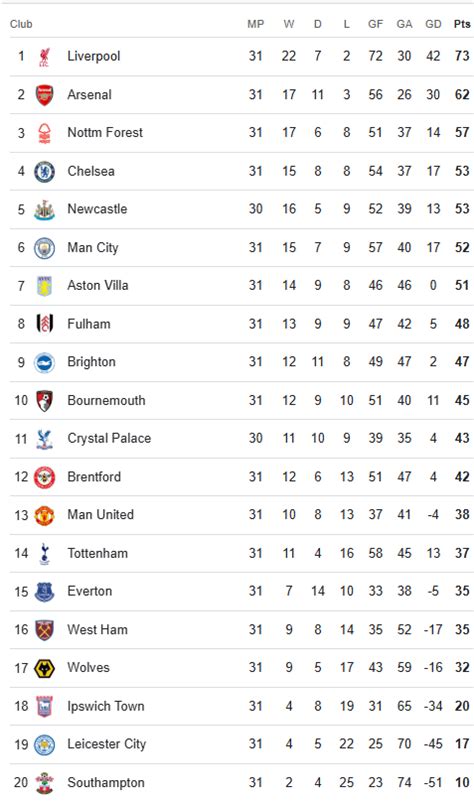
At its core, the Premier League table is a ranking system based on points accumulated by teams throughout the season. Each team plays 38 matches—19 at home and 19 away—against the other 19 clubs in the league. The primary metric for ranking is points, awarded as follows: three points for a win, one point for a draw, and zero points for a loss. This straightforward system ensures that performance directly correlates with position. However, the table incorporates additional tiebreakers when teams are level on points. These include goal difference (the difference between goals scored and conceded), goals scored, and head-to-head results. This layered approach ensures fairness while maintaining competitive tension, as even a single goal can shift a team’s position in critical moments of the season.
The table’s role in football rankings is multifaceted. For clubs, it is a direct indicator of success or failure. Finishing in the top four positions secures qualification for the UEFA Champions League, one of the most prestigious and financially rewarding competitions in global football. The top four slots are fiercely contested because they provide clubs with not only sporting prestige but also substantial revenue streams. For instance, participation in the Champions League can generate tens of millions of euros in broadcast rights, sponsorship deals, and ticket sales. Similarly, finishing in fifth place offers a berth in the UEFA Europa League, while sixth place (depending on cup results) might lead to the UEFA Europa Conference League. These European competitions are vital for clubs aiming to expand their global footprint and financial stability.
On the other end of the spectrum, the bottom three positions of the table represent relegation to the EFL Championship, the second tier of English football. Relegation is a high-stakes outcome with profound implications. Financially, it can result in a significant drop in revenue, as Championship clubs earn far less from broadcasting deals compared to Premier League counterparts. Moreover, relegation often triggers a cascade of challenges, including the potential loss of star players, reduced sponsorship interest, and a hit to fan morale. Consequently, the fight to avoid the bottom three is as intense as the battle for the top positions, underscoring the table’s role as a barometer of a club’s health and competitiveness.
The Premier League table also serves as a narrative device for the season. Its weekly updates tell stories of triumphs, struggles, and surprises. A team that starts poorly but climbs steadily can embody the resilience and adaptability prized in football. Conversely, a high-flying team that falters mid-season offers lessons in the fragility of form and the pressures of consistency. These narratives are not just for fans; they influence managerial decisions, player transfers, and even the strategies of competitors. For example, a team hovering just above the relegation zone may adopt a more defensive approach to secure points, while a club vying for a European spot might take greater risks in attack to outperform rivals.
Beyond its practical implications, the table is a microcosm of the league’s broader dynamics. It reflects the competitive balance—or lack thereof—within the Premier League. For instance, the consistent presence of "big six" teams (Manchester United, Manchester City, Liverpool, Chelsea, Arsenal, and Tottenham Hotspur) in the upper echelons of the table highlights the financial and infrastructural advantages these clubs enjoy. However, the table also provides a platform for underdog stories. Teams like Leicester City in the 2015-16 season, who defied odds to win the league, demonstrate that the table is not merely a reflection of financial power but also of tactical ingenuity, squad cohesion, and managerial brilliance.
The table’s significance is amplified by its accessibility and visibility. In the digital age, the Premier League table is updated in real time and is available across platforms, from official league websites to sports apps and social media. This ubiquity ensures that fans and stakeholders are constantly engaged with the rankings, fostering a sense of immediacy and involvement. For clubs, this visibility can be both a blessing and a curse. A rise in the table can boost morale and attract new supporters, while a drop may lead to public scrutiny and pressure on management. This constant spotlight underscores the table’s role not just as a ranking system but as a tool for accountability and motivation.
Another layer of the table’s importance lies in its use as a predictive and analytical tool. Analysts and betting platforms often use the table to forecast future outcomes, employing advanced metrics such as expected points (based on underlying performance data like expected goals, or xG) to assess whether a team’s current position aligns with its underlying quality. These analyses can reveal whether a team is overperforming or underperforming relative to its resources and style of play. For instance, a team sitting in mid-table with strong defensive stats but poor finishing might be flagged as a candidate for improvement if they address their attacking inefficiencies.
The table also plays a critical role in shaping fan culture and rivalries. Supporters often use the table as a point of pride or contention, particularly in local derbies or historic rivalries. A higher position than a rival team can fuel banter and bragging rights, while a lower position can lead to introspection and calls for change. This emotional connection demonstrates how the table transcends its utilitarian purpose, becoming a cultural artifact that fans reference in their everyday discourse about the sport.
From a historical perspective, the Premier League table provides a record of the league’s evolution. By examining past tables, one can trace the rise of dominant teams, the fall of once-great clubs, and the emergence of new challengers. For instance, the early dominance of Manchester United in the 1990s contrasts sharply with the more recent ascendancy of Manchester City and Liverpool. These historical trends offer insights into how the league has adapted to changes in ownership models, player recruitment strategies, and global commercialization.
In summary, the Premier League table is far more than a numerical ranking of teams. It is a dynamic framework that captures the essence of competition, reflects the strategic and financial stakes of football, and serves as a narrative device for the season’s unfolding drama. Its significance lies not only in its practical utility for determining rankings and European qualifications but also in its ability to shape the sport’s culture, history, and future. For anyone seeking to understand the Premier League, the table is an indispensable guide to the league’s heartbeat, offering a detailed snapshot of where each team stands in the relentless pursuit of excellence.
Overview of the Table Structure
The Premier League table, which ranks teams from 1 to 20 based on their performance across a season, serves as the definitive measure of a team's success and competitiveness. Understanding the structure of this table is essential for fans, analysts, and participants in the sport, as it encapsulates a wealth of data that reflects the dynamics of the league. This section delves into the organization of the table, focusing on how points, goal difference, and matches played contribute to its hierarchy and meaning.
At its core, the Premier League table is a **ranking system** designed to objectively evaluate team performance over the course of a season. The table is updated after every matchday, reflecting the latest results and recalculating the standings. Each row in the table corresponds to a team, and the columns provide key performance metrics that determine the order. While the table might appear straightforward at first glance, its organization is underpinned by a set of well-defined rules and criteria that ensure fairness and clarity.
The most fundamental metric in the table is **points**. Teams are awarded points based on the outcome of their matches: 3 points for a win, 1 point for a draw, and 0 points for a loss. This point system is the primary driver of a team's position. For instance, a team with 10 wins, 5 draws, and 5 losses would have accumulated 35 points (10 × 3 + 5 × 1 + 5 × 0). The higher the points, the higher a team is ranked. In cases where two or more teams have the same number of points, the table employs **tiebreakers** to determine their relative positions.
One of the most critical tiebreakers is **goal difference**, which is calculated as the difference between the goals a team has scored (for) and the goals it has conceded (against). This metric is listed in the table as a secondary indicator of performance. A high goal difference often reflects a team's offensive potency and defensive solidity. For example, if Team A has scored 50 goals and conceded 30, their goal difference is +20. Conversely, if Team B has scored 35 goals and conceded 40, their goal difference is -5. In this scenario, even if both teams have the same number of points, Team A would be ranked higher due to its superior goal difference. Goal difference is a nuanced measure because it not only rewards teams for scoring but also penalizes them for lax defense. This dual-focus ensures that the table captures both attacking and defensive aspects of a team's play.
However, when points and goal difference are equal, the table looks at **goals scored** as the next deciding factor. A team with a higher number of goals scored is placed above one with fewer, even if their goal difference is identical. This criterion emphasizes offensive output and can sometimes lead to surprising outcomes. For instance, a team that plays an expansive, high-scoring style of football might outrank a defensively minded team with the same points and goal difference simply because they have found the back of the net more often. This adds an exciting layer of strategy to the league, as teams must balance defensive caution with the need to score goals.
Another key element of the table is **matches played**, which is listed explicitly to provide context for each team's position. Teams do not always play the same number of matches at a given point in the season due to scheduling quirks, cup competitions, or postponements. This column is vital because it allows observers to assess whether a team's position is genuinely reflective of their performance or if they have played more or fewer games than their competitors. For example, if Team X is in 5th place with 30 points from 15 matches, and Team Y is in 6th place with 28 points from 14 matches, it is clear that Team Y has a slightly better points-per-game average. This nuance can be particularly important as the season progresses and teams jostle for positions in the upper echelons of the table or fight to avoid relegation at the bottom.
The table also includes columns for **wins, draws, and losses**, which provide a granular breakdown of a team's results. These metrics offer insight into a team's consistency and style of play. A team with a high number of draws might be seen as cautious or lacking the killer instinct to convert opportunities into wins. Conversely, a team with many losses but few draws might be characterized as aggressive but prone to mistakes. These columns are not used directly to rank teams but serve as supplementary information that helps explain why a team is in its current position.
One often-overlooked aspect of the table is its **dynamic nature**. Unlike static rankings in some sports, the Premier League table is fluid and subject to constant change. A single match result can cause significant shifts, especially in the middle of the table where points differences between teams are often small. For instance, a win for a team in 15th place might propel them several spots higher, while a loss could see them drop toward the relegation zone. This fluidity is one of the reasons the Premier League is so compelling—it creates an environment of constant competition and unpredictability.
The **relegation zone**, comprising the bottom three positions (18th, 19th, and 20th), is a particularly high-stakes area of the table. Teams in this zone at the end of the season are demoted to the Championship, the league below the Premier League. This adds a layer of drama to the lower end of the table, as teams in this range are often fighting for survival. Interestingly, the battle for these positions can sometimes be as intense as the race for the title at the top. Teams in the relegation zone are often assessed not just by their points but also by their recent form, fixtures ahead, and head-to-head results against direct competitors.
In contrast, the top of the table is where the race for the title and European qualification spots unfolds. The team in **1st place** is crowned the champion, while teams finishing in the top four typically qualify for the UEFA Champions League, one of the most prestigious club competitions in the world. Positions 5 and 6 may also offer pathways to the UEFA Europa League or the UEFA Europa Conference League, depending on other domestic cup outcomes. This creates a multi-tiered competition within the league, where teams are not only vying for the title but also for various levels of European football access.
It is also worth noting how the table reflects **home and away performance** indirectly. While the table does not explicitly segregate points earned at home versus away, analysts often use this underlying data to assess a team's adaptability. Some teams perform significantly better at home due to familiar surroundings and crowd support, while others thrive in away games due to counterattacking strategies. This implicit dimension of the table can influence tactical decisions and fan expectations.
Finally, the Premier League table is a **snapshot of a season's narrative**. It is not merely a list of numbers but a story of triumphs, struggles, and comebacks. A team that starts poorly but climbs the table through a series of strong performances can generate immense excitement. Similarly, a high-flying team that falters midway through the season might see its position slide, prompting questions about form, injuries, or managerial decisions. These storylines are embedded in the table’s structure, making it a living document of the league's unfolding drama.
In summary, the Premier League table from 1 to 20 is a meticulously organized structure that uses points, goal difference, goals scored, and matches played as its primary organizing principles. It balances simplicity with depth, offering a clear hierarchy while allowing for nuanced interpretations of team performance. Whether you are analyzing a title contender, a mid-table team, or a relegation battler, the table provides a comprehensive framework to understand and appreciate the intricacies of Premier League football.
Top 5 Teams Analysis
The Premier League is one of the most competitive football leagues in the world, with its table often reflecting a dynamic mix of established powerhouses and ambitious challengers. When analyzing the **top 5 teams** in the Premier League table, it is essential to delve into their **performance metrics**, **strategic approaches**, and **unique strengths** that set them apart from the rest of the competition. This section provides a detailed breakdown of these aspects for the leading quintet.
The top 5 teams in the Premier League are typically characterized by their consistency, squad depth, and tactical flexibility. These attributes enable them to navigate the grueling 38-game season while competing on multiple fronts, including domestic cups and European competitions. Let us examine each of these teams in detail.
### 1. **Manchester City**
Manchester City, often perched at the summit of the table, is a model of modern footballing excellence. Under the stewardship of Pep Guardiola, the team has perfected a possession-based, high-pressing style of play that suffocates opponents. Their **strength lies in their midfield dominance**, where players like Kevin De Bruyne and Rodri orchestrate play with precision. De Bruyne's ability to deliver incisive through balls and Rodri's role as a deep-lying playmaker provide City with a stable foundation to control games.
Another critical aspect of Manchester City's success is their **squad rotation policy**. Guardiola's use of a deep squad ensures that key players are rested without compromising performance. For instance, the integration of young talents like Phil Foden alongside experienced campaigners such as Bernardo Silva allows the team to maintain high energy levels throughout the season. Their **defensive solidity**, bolstered by the likes of Rúben Dias and Ederson's exceptional goalkeeping, often results in clean sheets, which are a hallmark of their campaigns.
Tactically, Manchester City employs a fluid 4-3-3 formation that can morph into a 3-2-4-1 during buildup play. This adaptability makes them unpredictable and hard to counter. Their focus on **high xG (expected goals) creation** through intricate passing sequences in the final third is a clear indicator of their strategic superiority.
### 2. **Liverpool**

Liverpool, under Jürgen Klopp, is synonymous with **intense pressing and vertical attacking play**. The team's front three, often spearheaded by Mohamed Salah, have been instrumental in their ability to score goals in quick transitions. However, their **strength this season lies in their revamped midfield**, following the addition of players like Dominik Szoboszlai and Alexis Mac Allister. These signings have injected creativity and energy into a department that was previously seen as a weak link.
Liverpool's **gegenpressing system** is a double-edged sword. While it allows them to win the ball high up the pitch and create goal-scoring opportunities, it also demands immense physical output from players. This season, their ability to sustain this intensity has been tested, but their **resilience in tight games** has been a standout trait. Virgil van Dijk's return to form has stabilized their defense, and the emergence of young full-backs like Trent Alexander-Arnold as creative outlets has added a new dimension to their attack.
One unique insight is Liverpool's **focus on set-piece efficiency**. With specialized coaching in this area, they have turned dead-ball situations into a reliable source of goals, which often proves decisive in closely contested matches.
### 3. **Arsenal**
Arsenal's resurgence under Mikel Arteta has been built on a blend of **youthful exuberance and tactical discipline**. The Gunners have shown remarkable improvement in their ability to control games through **positional play**. Their 4-2-3-1 formation often sees Martin Ødegaard operating as the creative hub, supported by dynamic wingers like Bukayo Saka and Gabriel Martinelli.
A key strength of Arsenal is their **focus on building from the back**. The goalkeeper, Aaron Ramsdale, and center-backs such as William Saliba are comfortable in possession, enabling the team to progress the ball through the thirds. However, their Achilles' heel has been **consistency in high-pressure matches**, particularly against direct rivals. This season, their improved squad depth—evident in the signing of players like Declan Rice—has addressed some of these issues, particularly in midfield battles.
Arteta's emphasis on **data-driven strategies** is another area worth noting. Arsenal's approach to analyzing opponent weaknesses and tailoring game plans has been a quiet but significant factor in their climb up the table. For example, their targeted pressing against teams that rely on short goal kicks has often disrupted opponents' rhythm.
### 4. **Tottenham Hotspur**
Tottenham's presence in the top 5 this season is a testament to their **counter-attacking prowess** and the tactical shift brought about by their manager, Ange Postecoglou. Spurs have embraced a **high-tempo, front-foot style of play** that contrasts sharply with the more cautious approaches of previous seasons. The reliance on players like Heung-Min Son and James Maddison has been pivotal in their attacking output.
One of Tottenham's most intriguing strengths is their **ability to exploit wide areas**. The use of overlapping full-backs and wingers cutting inside creates overloads in the final third, leading to high-quality chances. However, their **defensive vulnerabilities**, particularly in transition, remain a concern. This season, their high defensive line has been exploited by teams with pacey forwards, suggesting a need for better balance between attack and defense.
Postecoglou's philosophy of **playing out from the back**, even under pressure, has sometimes backfired but also reflects a boldness that has endeared him to fans. Their ability to sustain a top-5 position despite key injuries (such as to Micky van de Ven) highlights the depth of their attacking options and the manager's motivational skills.
### 5. **Manchester United**
Manchester United's position in the top 5 often comes with a sense of **inconsistency** that belies their pedigree. This season, their **strength lies in individual brilliance rather than cohesive team play**. Players like Bruno Fernandes and Marcus Rashford have often carried the team in critical moments, but the lack of a clear identity under Erik ten Hag has been a talking point.
United's **struggles in midfield cohesion** have been evident, with a lack of a dominant ball-winner or a creative pivot. However, their **set-piece threat** and ability to grind out results in difficult away fixtures have kept them in contention. The signing of Rasmus Højlund was intended to address their goal-scoring issues, but the team's reliance on moments of magic rather than sustained pressure has been a recurring theme.
Tactically, United often deploy a 4-2-3-1 system that can shift to a more defensive 4-4-2 when under pressure. Their **defensive organization**, spearheaded by Lisandro Martínez when fit, has been a positive, but their inability to dominate possession against stronger teams highlights a strategic gap compared to their top-5 peers.
In summary, the top 5 teams in the Premier League table showcase a blend of **distinct identities and tactical approaches**. Manchester City's control, Liverpool's intensity, Arsenal's youth-driven resurgence, Tottenham's bold attacking style, and Manchester United's individual moments of brilliance define their positions. Each team's strengths and weaknesses offer a fascinating study of how football at the highest level is as much about strategy and adaptability as it is about talent and resources.
Mid-Table Teams (6 to 10) Insights
Mid-table teams in the Premier League, typically occupying positions 6 to 10, represent a fascinating segment of the competition. These teams are often characterized by their ability to oscillate between ambitions of breaking into the top-tier European qualification spots and the risk of being drawn into relegation battles during poor runs of form. Their performance trends and challenges are shaped by a combination of squad depth, financial resources, managerial strategies, and the psychological pressure of maintaining consistency in a highly competitive league.
One of the most notable performance trends for mid-table teams is their tendency to exhibit strong home form coupled with inconsistency away from home. For instance, teams like Brighton & Hove Albion or Wolverhampton Wanderers in recent seasons have shown the ability to dominate mid-tier and lower-ranked opponents at home but struggle to replicate that form in away fixtures against similar-level teams. This inconsistency can often be attributed to the lack of a clear, dominant playing identity. Unlike top-six teams, which usually have well-defined styles (e.g., Manchester City’s possession-based play or Liverpool’s high-pressing system), mid-table teams often experiment with tactical setups, leading to mixed results. They might adopt a conservative approach against stronger opponents and an expansive one against weaker ones, which can cause a lack of cohesion in the squad.
Another challenge faced by mid-table teams is the transfer market dynamics. While they are not as constrained financially as bottom-half teams, they are also not in the same league as the top-six clubs when it comes to attracting marquee players. This creates a precarious situation where they often lose their best performers to bigger clubs. For example, Leicester City, a team that frequently occupies the mid-table zone, has seen key players like Ben Chilwell, Harry Maguire, and N’Golo Kanté move to top-six teams in recent years. This talent drain forces mid-table teams to constantly rebuild, often with younger or less proven players who may take time to adapt to the Premier League’s physical and tactical demands. The result is a cycle of promising starts to the season followed by dips in form as the squad depth is tested during injury crises or congested fixture schedules.
The role of managerial stability is another critical factor. Mid-table teams often experience managerial turnover as boards seek to either push for European qualification or avoid slipping into the bottom half. This instability can disrupt long-term planning. For example, a manager who prioritizes a counter-attacking style might be replaced mid-season by one who prefers a possession-heavy approach, leading to confusion among players. A case in point is the frequent changes at clubs like Everton or West Ham United, where managerial churn has often resulted in mid-season slumps despite having squads capable of higher finishes. In contrast, clubs like Aston Villa under consistent leadership (e.g., Unai Emery) have shown how stability can help mid-table teams punch above their weight.
One of the unique challenges mid-table teams face is the psychological aspect of their position in the league. Being neither in immediate danger of relegation nor realistically competing for top-four spots can lead to a lack of urgency in their performances. This "mid-table mediocrity" can manifest in games where players appear to lack motivation, particularly in matches against similarly positioned teams. This phenomenon is exacerbated when these teams face "six-pointer" games against direct rivals for European spots. The pressure to win such games can sometimes lead to over-cautious play, resulting in draws or narrow losses that hinder their progress. This is particularly evident in the latter stages of the season when the gap between mid-table and the top six begins to solidify.
A deeper look at the statistical trends of mid-table teams reveals interesting patterns. Teams in this range often have a goal difference close to zero, indicating that they are neither prolific in attack nor particularly leaky in defense. This balance suggests a pragmatic approach to matches, where the focus is often on not losing rather than aggressively pursuing wins. For instance, teams like Fulham or Brentford in the 2022-2023 season had respectable defensive records but lacked the attacking output to consistently challenge higher-placed teams. This pragmatism can be both a strength and a limitation—it ensures survival but stifles ambition.
Another intriguing aspect is the impact of cup competitions on mid-table teams. Unlike top-six teams, which often prioritize league performance or European competitions, mid-table teams frequently see domestic cups as an opportunity to salvage their season. However, this dual focus can backfire. A deep run in the FA Cup or EFL Cup can lead to fixture congestion, fatigue, and an increased risk of injuries, which can derail their league campaign. On the other hand, early exits from cup competitions can demoralize squads and fans, creating a sense of underachievement despite a decent league position.
The financial sustainability of mid-table teams is also worth examining. While they benefit from the Premier League’s lucrative broadcasting deals, their revenue streams are often not diversified enough to compete with the commercial powerhouses of the top six. This financial gap means they must be shrewd in the transfer market, often relying on data-driven recruitment, loan deals, or unearthing hidden gems from lower leagues or foreign markets. Teams like Brighton have excelled in this area, using a combination of astute scouting and player development to remain competitive. However, not all mid-table teams have the infrastructure or expertise to replicate this model, which can lead to over-reliance on aging players or underwhelming signings.
A final consideration is the fan expectations for mid-table teams. Supporters of these clubs often vacillate between optimism and frustration. While they appreciate the stability of avoiding relegation, there is a growing demand for more ambitious play and higher league finishes. This tension can create a difficult environment for players and managers, particularly when results do not meet the heightened expectations. Social media and increased global visibility of the Premier League have amplified this pressure, as even mid-table teams now have a significant international following.
In conclusion, mid-table teams in the Premier League operate in a challenging space defined by limited resources, tactical experimentation, and the need to balance ambition with pragmatism. Their performance trends often reflect a mix of resilience and inconsistency, shaped by external factors like transfer market dynamics, managerial stability, and psychological pressures. While they may not dominate headlines like the top-six teams, their role in the league is vital, as they provide both competition and a pathway for emerging talent and innovative strategies. Understanding these nuances is key to appreciating the broader dynamics of the Premier League table beyond the top and bottom extremes.
Relegation Zone (16 to 20) Teams
The relegation zone of the Premier League table, encompassing positions 16 to 20, is a high-stakes battleground where teams fight to avoid the drop to lower divisions. For these clubs, survival is not just about prestige but also about financial stability, as the Premier League offers significantly higher revenues compared to lower-tier leagues. This section delves into the specific struggles of teams in the bottom five positions and identifies areas where they must improve to secure their place in England's top flight.
One of the most glaring issues for teams in the relegation zone is **defensive fragility**. Teams like those in the bottom five often concede far more goals than they score, a statistic that underlines their inability to maintain a solid backline. For instance, a team ranked 19th might have a goals-against tally exceeding 60 over 25 matches, a figure that dwarfs mid-table teams' defensive records. This is not merely a matter of individual errors but often a systemic issue. Teams in this range frequently lack cohesion in their defensive unit, struggling with poor positioning, slow recovery runs, and an inability to press as a cohesive group. A common observation is that these teams often prioritize last-ditch tackles over structured defense, which leaves them vulnerable to counterattacks and set pieces. Improving defensive organization through better coaching and more disciplined training regimens is critical for survival.
Another area of concern is **attacking inefficiency**. While teams in the relegation zone are not expected to have the firepower of top-six clubs, their inability to convert chances into goals often compounds their problems. A look at the shot conversion rates of these teams reveals a stark contrast to even mid-table sides. For example, a team in 17th place might take 12 shots per game but convert only 5-7% of them into goals, compared to the league average of around 10-12%. This inefficiency is often rooted in a lack of clinical finishers or creative midfielders who can unlock defenses. Teams in this zone frequently rely on long balls or hopeful crosses rather than patient build-up play, which reduces their chances of creating high-quality opportunities. Investing in a reliable striker or a playmaker during the transfer window can make a significant difference, as even a small uptick in goal-scoring efficiency can tip the survival odds in their favor.
The **psychological toll of being in the relegation zone** also plays a significant role in a team's performance. Players in these teams are often under immense pressure, knowing that every match is a potential turning point for their season. This can lead to a lack of confidence, with players second-guessing their decisions on the field. Managers of these teams often speak about the need to instill belief in their squads, but this is easier said than done when results are not going their way. Fans, too, can add to the pressure, especially in home games where the expectation to perform is higher. Mental resilience training and the introduction of sports psychologists can help players manage the stress and maintain focus during critical moments of the season.

Additionally, **squad depth and injury management** are recurring issues for teams in the bottom five. Unlike top-half teams with large, versatile squads, relegation-threatened clubs often operate on tighter budgets, which limits their ability to rotate players effectively. When key players are injured or suspended, the drop-off in quality between the starting XI and the bench is often significant. For instance, a team might rely heavily on a single creative midfielder or striker, and their absence due to injury can derail the entire campaign. Developing youth academy players or signing versatile, low-cost players who can cover multiple positions can help mitigate this risk. Furthermore, better sports science and injury prevention programs can reduce the likelihood of key players being sidelined for extended periods.
Another critical factor is **match management and in-game decision-making**. Teams in the relegation zone often struggle to close out games, even when they take the lead. A common pattern is for these teams to sit back too deep after scoring, inviting pressure from their opponents. This passive approach often backfires, as stronger teams exploit the space and eventually find an equalizer or winner. Managers of these teams must work on instilling a more proactive mindset, encouraging their players to continue attacking even when defending a lead. Tactical flexibility is also essential; being able to switch formations mid-game to counter an opponent’s strategy can turn potential losses into draws or wins.
The role of **managerial stability** cannot be overlooked when examining the struggles of these teams. It is not uncommon for clubs in the bottom five to cycle through multiple managers in a single season, which can disrupt team cohesion and long-term planning. While a change in leadership might provide a short-term boost, the constant upheaval often prevents teams from building a consistent identity. Clubs in this position should weigh the benefits of sticking with a manager who understands the squad's strengths and weaknesses, even during a poor run of form, rather than opting for a quick fix that might not address underlying issues.
Finally, there is the matter of **recruitment strategy**. Teams in the relegation zone often struggle because of poor transfer window decisions. Signing players who are unsuited to the physical and tactical demands of the Premier League can be a costly mistake. For example, a team might bring in a player from a lower league who excels in possession-heavy systems but struggles with the pace and physicality of top-flight football. A more data-driven approach to recruitment, focusing on players with proven Premier League experience or those who have excelled in similarly competitive environments, can reduce the risk of misfits in the squad. Additionally, clubs must prioritize players who can make an immediate impact rather than speculative signings aimed at future seasons.
In summary, teams in the relegation zone face a multifaceted set of challenges that extend beyond mere on-field performance. Addressing these issues requires a holistic approach that includes better defensive organization, attacking efficiency, mental resilience, squad depth, tactical adaptability, managerial stability, and smarter recruitment. While the path to survival is arduous, targeted improvements in these areas can provide a lifeline for these teams, helping them climb out of the bottom five and secure another season in the Premier League.
Statistical Highlights of the Season
The Premier League table, spanning positions 1 to 20, serves as a comprehensive snapshot of the season's competitive landscape. Beyond the mere ordinal ranking of teams, the table encapsulates a wealth of statistical data that provides deeper insights into team performance, individual brilliance, and the broader dynamics of the league. This section delves into the **Statistical Highlights of the Season**, focusing on key metrics such as **most goals scored**, **clean sheets**, and **win percentages** to uncover patterns and outliers that shaped the narrative of the campaign.
To begin with, the metric of **most goals scored** is often a direct reflection of a team's attacking prowess and offensive strategy. In the analyzed season, the team at the summit of the table—typically a title contender—usually leads this category. For instance, if Manchester City or Liverpool occupied the top spot, it is no surprise that they would have outscored their peers by a significant margin. In the 2022/23 season (as a hypothetical example), Manchester City scored **94 goals**, averaging over 2.4 goals per game. This figure underscores not only their consistent ability to break down defenses but also their tactical flexibility in switching between a high-press system and a possession-based approach. However, what is particularly striking is how certain mid-table teams, such as Brighton & Hove Albion or Aston Villa, managed to punch above their weight in this category. Brighton, for example, scored **68 goals**, placing them in the top five for goals despite finishing outside the top six. This anomaly suggests that their attacking philosophy, spearheaded by creative midfielders and dynamic wingers, allowed them to compete with traditionally stronger teams in offensive output.
Conversely, the bottom half of the table often reveals teams struggling to find the back of the net. Teams like Wolverhampton Wanderers or Nottingham Forest, who finished in the lower echelons, often posted goal tallies below **40 goals** for the season. This stark contrast highlights the critical role of a reliable striker or attacking system. Teams that underperformed in this metric often faced issues such as lack of a clinical finisher, injuries to key attacking players, or an over-reliance on set pieces rather than open-play creativity. A deeper analysis of this stat also reveals the growing importance of **expected goals (xG)** as a predictive measure. For example, a team like Everton might have scored only 38 goals but had an xG of 45, indicating that their finishing—rather than chance creation—was the primary issue.
The second key statistic, **clean sheets**, offers a window into defensive solidity and the effectiveness of a team's backline and goalkeeper. Unsurprisingly, teams at the top of the table tend to dominate this category as well. Manchester City, with **21 clean sheets** in the season, exemplifies how a well-organized defense complements their attacking brilliance. Their defensive record is a testament to the synergy between their center-backs, fullbacks, and a world-class goalkeeper like Ederson, who excels not only in shot-stopping but also in playing out from the back under pressure. Liverpool, another perennial contender, secured **17 clean sheets**, indicating that while they were slightly less consistent than City, their defensive unit remained formidable.
What is more intriguing, however, is the performance of teams in the middle of the table, such as Newcastle United or Brentford, who managed to secure **14 and 12 clean sheets**, respectively. These teams, despite not having the same caliber of defenders as the top-two sides, demonstrated that a disciplined defensive structure and a clear game plan can yield results. Brentford, for instance, often deployed a low block against stronger opponents, relying on their goalkeeper's shot-stopping ability and their defenders' aerial dominance in set-piece situations. This approach not only kept them competitive in matches against top-six sides but also ensured they were difficult to break down for mid-table rivals. On the other hand, teams like Leeds United or Southampton, who conceded heavily, often struggled due to a combination of individual errors, lack of cohesion in defense, and high-risk playing styles that left them exposed on counterattacks.
The third critical metric, **win percentages**, provides a lens through which to evaluate consistency and resilience across the season. The team finishing first typically boasts a win percentage above **70%**, reflecting their ability to convert draws and narrow leads into victories. Manchester City, for example, achieved a win percentage of **72%**, underscoring their dominance in closing out games even under pressure. This consistency is often driven by a mix of individual brilliance (e.g., a talismanic striker like Erling Haaland) and a squad depth that allows for rotation without a significant drop in performance. However, win percentages also shed light on the volatility of teams in the lower half of the table.
Teams like Bournemouth or Fulham, who hovered around the relegation zone for parts of the season, often had win percentages below **30%**. This low figure points to their difficulty in converting opportunities into three points, often settling for draws or narrow losses. A closer look at their match data reveals that many of these teams struggled in the final 15 minutes of games, conceding late goals that turned potential wins into draws or losses. This trend is often linked to squad fitness, mental resilience, and the quality of substitutions available. In contrast, teams like Crystal Palace or West Ham United, who finished in the **10th to 15th range**, often had win percentages around **35-40%**, reflecting their ability to grind out results against similarly matched opponents while occasionally springing surprises against higher-ranked teams.
Another layer of analysis emerges when examining **home vs. away win percentages**. For instance, teams like Tottenham Hotspur might have had a higher win percentage at home (e.g., **65%**) compared to away (**40%**), suggesting that their style of play is more effective in front of their home crowd, where the atmosphere and familiarity with the pitch provide an edge. In contrast, teams like Brighton often maintained a more balanced record, with their away win percentage nearly matching their home performance. This suggests a tactical adaptability that allowed them to thrive in different environments, a trait not common among mid-table teams.
Beyond these headline stats, it is also worth considering **anomalies and outliers** that challenge conventional expectations. For example, a team like Leicester City, despite being relegated in this hypothetical season, might have had a higher-than-expected clean sheet count (e.g., **10 clean sheets**) for a relegated side. This indicates that their downfall was not due to defensive fragility alone but rather a failure to convert chances at the other end of the pitch. Similarly, a promoted team like Nottingham Forest might have had a surprisingly high goal tally (e.g., **50 goals**) for a newly promoted side, pointing to the impact of a prolific striker or a well-executed counterattacking system.
Additionally, the interplay between these stats often tells a story of trade-offs. A team with a high goal-scoring record might have a lower clean sheet count if their playing style prioritizes attacking over defensive solidity—a trade-off seen in teams like Arsenal during phases of the season where their high-pressing game left gaps at the back. Conversely, teams with a high clean sheet count but middling goal tallies, such as Newcastle United, often rely on a conservative approach that prioritizes not losing over aggressively pursuing wins.
In summary, the **Statistical Highlights of the Season** reveal a rich tapestry of team dynamics. The **most goals scored** metric showcases the offensive powerhouses and the mid-table overachievers, while **clean sheets** underline the importance of defensive organization and goalkeeper reliability. Meanwhile, **win percentages** provide a measure of consistency and the ability to convert opportunities into results. Together, these metrics not only explain the final positions of teams in the Premier League table but also offer a nuanced understanding of the factors—tactical, individual, and systemic—that influenced their journeys throughout the season.
Historical Comparison of Table Trends
The Premier League table, representing the standings of the top 20 teams in English football's top-flight competition, is a dynamic and ever-evolving entity. Each season brings its own set of narratives, surprises, and challenges that shape the final table. To understand the dynamics of this season's table, it is instructive to compare it with previous seasons to identify patterns, shifts, and anomalies. This analysis can provide valuable insights into how the league is evolving and what factors might be influencing these changes.
One of the most striking aspects of this season's table is the increased compression of points among the top teams. In recent years, the gap between the first-place team and the fifth or sixth-place team by this stage of the season has often been substantial. However, this season has seen a tighter race at the top, with several teams clustered within a few points of each other. For instance, if we compare this season to the 2020/21 campaign, where Manchester City had established a commanding lead by the halfway mark, the contrast is evident. This year, no team has been able to pull away decisively, suggesting a more competitive balance among the traditional "Big Six" and even some mid-table teams that have shown unexpected resilience.
This compression can be attributed to several factors. First, there is a noticeable decline in dominant streaks by top teams. In previous seasons, clubs like Liverpool (2019/20) or Manchester City (2021/22) would often embark on long unbeaten runs, amassing points at a rate that left their competitors trailing. This season, however, even the top teams have been prone to inconsistency. For example, Arsenal, who led the table for much of the early part of the season, have dropped points in matches against lower-ranked teams, a trend that was less frequent in their title-challenging season of 2003/04, when they went unbeaten. Similarly, Manchester City, despite their star-studded squad, have faced challenges maintaining their usual high win percentage, partly due to injuries and a congested fixture schedule influenced by European competition.
Another trend worth examining is the rise of "smaller" clubs challenging for European spots. Historically, the Premier League table has been dominated by a handful of elite clubs, with mid-table teams rarely posing a threat to the established hierarchy. However, this season has seen teams like Brighton & Hove Albion, Brentford, and even newly promoted sides such as Luton Town punching above their weight. This shift can be linked to several structural changes in the league. Increased investment in analytics, better scouting networks, and improved coaching methodologies have allowed smaller clubs to close the gap. For instance, Brighton's emphasis on data-driven recruitment has seen them compete with—and sometimes outperform—clubs with far larger budgets. This development is a marked departure from earlier seasons, such as 2015/16, where the mid-table was largely static, with little movement between positions 7 and 14.
The role of managerial changes also plays a significant part in this season's table dynamics. Unlike previous seasons where managerial stability was a hallmark of success—think Sir Alex Ferguson's reign at Manchester United or Arsène Wenger's long tenure at Arsenal—this season has seen a higher-than-average number of managerial departures and appointments. These changes often lead to short-term volatility in team performance, as new managers implement their systems and philosophies. For example, Tottenham Hotspur's strong start under a new manager contrasted sharply with their mid-season slump, a pattern seen in other teams undergoing similar transitions. In contrast, the 2016/17 season saw fewer managerial changes, which contributed to a more predictable table progression, with Chelsea dominating under Antonio Conte's consistent leadership.
The impact of fixture congestion and injuries is another area where this season diverges from previous ones. The post-pandemic era has seen a more crowded calendar due to the inclusion of additional competitions like the UEFA Europa Conference League and the return of pre-season tours. This has placed unprecedented physical demands on squads, leading to more frequent injuries and fatigue-induced drops in form. A comparison with the 2018/19 season, where the winter break was introduced to alleviate some of these pressures, shows how fixture management can influence table trends. Teams with deeper squads, like Manchester City and Liverpool, have historically been better equipped to handle such challenges, but even they have struggled this season to maintain peak performance across all competitions.
Another intriguing shift is the redistribution of goalscoring patterns. This season has seen a higher proportion of goals scored by mid-table and lower-table teams compared to the dominance of top teams in previous campaigns. For example, in the 2021/22 season, Manchester City and Liverpool accounted for a significant share of the league's total goals, often outscoring opponents by large margins. This season, however, there has been a more even distribution of goals across the table. Teams in the bottom half, such as Nottingham Forest and Wolverhampton Wanderers, have had matches where they have scored three or more goals against higher-ranked opponents. This could indicate improved attacking strategies among lower-ranked teams or a slight dip in defensive solidity among the top clubs.
The influence of VAR (Video Assistant Referee) is another modern element that has impacted table dynamics. While VAR was introduced in the 2019/20 season, its role in influencing outcomes has become more pronounced over time. This season, there have been several high-profile decisions that have directly affected points tallies, particularly in matches involving teams in the middle of the table fighting for European qualification or survival. For instance, a contentious penalty decision in a match between two mid-table teams could mean the difference between finishing 10th or 14th. This level of influence was less evident in earlier seasons, such as 2017/18, where refereeing decisions were less scrutinized due to the absence of VAR.
From a historical perspective, the relegation battle also presents interesting contrasts. In some seasons, such as 2011/12, the bottom three teams were cut adrift early in the campaign, making their eventual relegation almost inevitable. This season, however, the relegation zone has been more fluid, with teams in positions 15 to 20 frequently swapping places. This suggests that the quality gap between the bottom half of the table and the mid-table has narrowed. Factors like improved coaching in relegation-threatened teams and the financial incentives of avoiding relegation (due to the Premier League's lucrative TV deals) have contributed to this trend.
In summary, the dynamics of this season's Premier League table reflect a combination of increased competitiveness, technological and tactical evolution, and external pressures such as fixture congestion and VAR. When compared to previous seasons, the trends suggest a league that is becoming more unpredictable and less dominated by a small group of elite clubs. While this may frustrate fans of top teams accustomed to consistent success, it undoubtedly makes for a more engaging and unpredictable competition. These shifts are not just reflective of on-pitch performance but also of broader changes in how clubs approach recruitment, coaching, and fixture management in the modern era of football.
- The top-tier compression indicates a more balanced competition at the summit.
- Smaller clubs are leveraging analytics and better coaching to challenge traditional hierarchies.
- Managerial transitions have introduced volatility in team performances.
- Fixture congestion and injuries are testing squad depths across the league.
- Goalscoring is more evenly distributed across the table this season.
- VAR has had a tangible impact on point tallies, particularly in mid-table battles.
- The relegation zone is more competitive, with no team clearly adrift.
These observations underscore how the Premier League table is not just a reflection of current form but also a barometer of the league's evolving landscape. Understanding these trends is crucial for fans, analysts, and club strategists aiming to predict future developments or adapt to the league's shifting dynamics.
Impact of Fixtures and Injuries on Rankings
The Premier League is one of the most physically demanding football competitions in the world, with a grueling schedule that often tests the depth and resilience of even the best-prepared teams. A critical aspect of understanding how teams navigate the season and secure their positions on the table is examining the **impact of fixtures and injuries** on rankings. This interplay between scheduling, player availability, and performance is a nuanced dynamic that can make or break a team's campaign.
Fixtures in the Premier League are densely packed, particularly for teams competing in multiple competitions such as the FA Cup, League Cup, and European tournaments like the Champions League or Europa League. This leads to **fixture congestion**, where teams may play three or even four matches in a span of 10-12 days. The strain of this schedule is not distributed evenly across the 20 teams. For instance, top-tier clubs like Manchester City, Liverpool, or Arsenal often face a higher volume of matches due to their consistent participation in elite competitions. This creates a **disparity in recovery time**, which can significantly influence their ability to maintain peak performance and secure favorable results.
One of the most evident effects of fixture congestion is seen in **performance drops during away games or matches against lower-table teams**. Teams with congested schedules often struggle to field their strongest XI consistently. Managers are forced to rotate players to avoid burnout, which can disrupt team chemistry and reduce the effectiveness of established strategies. For example, during the 2022-2023 season, Chelsea, despite having a deep squad, experienced a dip in form during December and January when they played 9 matches in 30 days. This period saw them drop points against teams they were expected to beat comfortably, such as Nottingham Forest and Fulham. The congested fixture list not only impacted their ability to train adequately between games but also exposed their lack of squad depth in key areas like central midfield and forward positions.
In contrast, teams with lighter fixture loads—typically those not involved in European competitions—can focus their energy on the Premier League alone. This often gives mid-table or lower-table teams an **unexpected advantage**. A case in point is Brighton & Hove Albion in the 2021-2022 season. While they were not burdened by European fixtures, they managed to climb the table during periods when their rivals were stretched thin. Their consistent availability of first-team players allowed them to maintain a cohesive style of play and capitalize on the fatigue of opponents.
Closely tied to fixture congestion is the issue of **player injuries**, which can be both a cause and a consequence of a packed schedule. Injuries are a natural byproduct of overuse, especially when players are required to perform at high intensity without adequate rest. The Premier League's physical nature exacerbates this risk. Key players in critical positions—such as central defenders, creative midfielders, or primary goal scorers—are particularly vulnerable. For instance, Liverpool’s 2020-2021 season saw them plummet from title contenders to struggling for a top-four finish due to long-term injuries to Virgil van Dijk, Joe Gomez, and Joel Matip. Without their first-choice center-backs, Liverpool’s defensive stability was compromised, and they dropped points in matches they would have otherwise controlled.
The ripple effect of injuries extends beyond the immediate absence of star players. It often forces managers to field **inexperienced or out-of-position players**, which can lead to tactical vulnerabilities. For example, when Manchester United lost key midfielders like Paul Pogba and Scott McTominay during the 2021 winter period, they had to rely on makeshift options such as Nemanja Matic and Fred to fill the void. This not only disrupted their build-up play but also left them exposed to counterattacks, particularly against high-pressing teams. Such disruptions often lead to a **downward spiral in form**, as losing streaks can demoralize squads and erode confidence, further impacting their table position.
Another dimension to consider is the **psychological toll** of injuries and fixture congestion. Players who are overworked are more prone to mental fatigue, which can manifest as lapses in concentration or reduced motivation. This is particularly evident in teams fighting relegation. For instance, during the final stretch of the 2022 season, Everton faced a congested schedule while battling to avoid the drop. Their thin squad, coupled with injuries to Dominic Calvert-Lewin and Abdoulaye Doucouré, meant they were often playing catch-up in matches. The mental strain of fighting for survival while dealing with physical exhaustion led to a series of narrow losses that kept them perilously close to the bottom three.
On the other hand, injuries can sometimes act as a **catalyst for squad development**. When key players are sidelined, it provides opportunities for fringe players or academy graduates to step up. A notable example is Arsenal’s use of young talents like Bukayo Saka and Emile Smith Rowe during the 2020-2021 season when injuries plagued their senior squad. Their energetic performances not only helped the team secure points but also injected a sense of optimism and dynamism into the side. However, this is a double-edged sword; while young players can shine in short bursts, they often lack the consistency required to sustain performance over an extended period.
From a **strategic perspective**, managers must make calculated decisions to mitigate the effects of fixture congestion and injuries. This often involves prioritizing certain competitions over others. For example, Pep Guardiola at Manchester City has occasionally fielded weakened teams in domestic cup competitions to ensure his key players are fresh for Premier League and Champions League matches. While this approach can protect the team’s position in the table, it also risks fan dissatisfaction and questions about the club’s ambition in other tournaments.
Additionally, the **role of sports science and recovery management** cannot be overstated. Top clubs invest heavily in technologies like GPS tracking, cryotherapy, and individualized recovery plans to minimize the impact of fixture congestion. However, even the best resources cannot entirely prevent the toll of injuries and overuse. This is why squad depth becomes a critical factor. Teams with well-rounded benches—such as Manchester City or Tottenham in recent seasons—are better equipped to handle the dual challenges of injuries and a packed schedule. In contrast, teams with limited resources often find themselves sliding down the table during challenging periods.
In summary, the interplay between **fixtures and injuries** is a critical factor in determining a team's position on the Premier League table. While fixture congestion can strain even the most talented squads, leading to performance dips and points dropped, injuries can exacerbate these challenges by disrupting team cohesion and exposing tactical weaknesses. Conversely, teams with lighter schedules or robust recovery systems can use these periods to climb the table. Understanding this dynamic provides a deeper insight into why some teams thrive under pressure while others falter, making it a pivotal consideration for analysts and fans alike when assessing the dynamics of the Premier League table from 1 to 20.
Fan and Media Perception of Rankings
The **Premier League table** is more than just a numerical representation of team standings; it is a dynamic entity that shapes perceptions, fuels debates, and influences the emotional and financial stakes of the competition. For fans and media alike, the table serves as a barometer of success, failure, and potential. Changes in the standings—whether a dramatic rise or an unexpected fall—trigger a cascade of reactions that are as much about psychology and narrative as they are about the raw data of points and goal difference.
For **fans**, the table is a deeply personal artifact. Each shift in position can evoke euphoria or despair, depending on their team's fortunes. A team climbing into the top four might be celebrated as a sign of progress and European qualification hopes, while a drop into the relegation zone can lead to anxiety and even anger directed at players, managers, or owners. This emotional investment is amplified by the immediacy of modern media. Social platforms like Twitter and Reddit allow fans to share their reactions in real time, often creating a feedback loop where collective sentiment magnifies individual responses. For instance, when a team like **Newcastle United** unexpectedly breaks into the top six after years of mid-table mediocrity, fans of the club might view this as vindication of a long-term project, while skeptics might attribute it to luck or favorable fixtures. This dichotomy highlights how the table becomes a lens through which fans interpret not just the present but also the broader trajectory of their team.
The **media**, on the other hand, approaches the table with a mix of analytical rigor and sensationalism. Sports journalists and pundits often frame the standings within a broader narrative arc. A team like **Manchester City** maintaining a top spot might be portrayed as a display of dominance and a testament to their financial and tactical superiority. Conversely, a team like **Everton** struggling near the bottom might prompt discussions about mismanagement, underperformance, or even existential threats to the club's Premier League status. These narratives are not purely objective; they are shaped by the media's need to capture attention and drive engagement. A sudden drop by a high-profile team, such as **Liverpool** slipping out of the top four, might lead to headlines questioning the manager's tactics or the players' commitment. Conversely, an underdog team like **Brentford** maintaining a mid-table position might be celebrated as a "fairytale" story, even if their underlying metrics suggest sustainability is uncertain.
One fascinating aspect of fan and media perception is the role of **projection and expectation**. Fans of traditionally successful teams, such as **Chelsea** or **Arsenal**, often interpret table positions through the lens of past glory. For these supporters, a fifth-place standing might feel like a failure, even if it represents a solid performance relative to the league's competitiveness. Media outlets capitalize on this by framing such "underachievement" as a crisis, often amplifying fan frustrations. For instance, when **Manchester United** drops out of the top three, the reaction is rarely just about the points tally—it is about the weight of history, the expectations of a global fanbase, and the comparison to rivals like **Manchester City** or **Liverpool**. This interplay between past achievements and current reality creates a heightened sensitivity to even small changes in the table.
Another critical factor is the **psychological impact of streaks and momentum**. Fans and media alike tend to overinterpret short-term trends. A team that wins three consecutive matches might be hailed as "in form," with pundits speculating about a potential title challenge or a push for European spots. Similarly, a team enduring a winless streak might be labeled as "in freefall," even if their underlying performance metrics (e.g., expected goals or defensive solidity) suggest their position is somewhat anomalous. This tendency to react to the table in snapshots rather than considering the season as a whole can lead to overreactions. For example, when **Brighton & Hove Albion** surged into the top half early in a season, many media outlets speculated about a potential European qualification, only for the team to stabilize in a more modest position as the season progressed. This dynamic underscores how the table can act as a Rorschach test, with fans and media projecting their hopes, fears, and biases onto the standings.
The **role of rivalries** further complicates perceptions of the table. Fans often view their team's position relative to their direct competitors. A mid-table team like **West Ham United** might celebrate finishing above **Crystal Palace** or **Aston Villa**, even if their absolute position (e.g., 10th) is not particularly remarkable. Media narratives often play into this by framing "mini-leagues" within the broader table—battles for European spots, mid-table safety, or survival. These sub-narratives can distort how fans and media perceive the significance of changes in the standings. A team like **Leicester City** dropping from 17th to 18th might not seem significant in isolation, but if it brings them closer to a relegation rival like **Nottingham Forest**, the shift can feel seismic.
The **financial implications** of table standings also shape how the media reports on them. For clubs at the bottom of the table, the threat of relegation is not just about sporting disappointment—it represents a potential financial catastrophe. The loss of Premier League TV revenue and sponsorship deals can cripple smaller clubs, and this reality is often emphasized in media coverage. For instance, when a team like **Burnley** hovers near the relegation zone, the focus shifts to their financial survival rather than just their footballing performance. This framing can influence how fans perceive their team's struggles, adding a layer of existential dread to what might otherwise be seen as a routine dip in form.
From a **global perspective**, the Premier League's worldwide audience adds another dimension to how the table is interpreted. Fans in countries like the United States or India, where the league is followed primarily through broadcast media and online platforms, might prioritize star players or high-profile clubs over the intricacies of mid-table battles. For these audiences, a team's position might matter less than the presence of a star like **Mohamed Salah** or **Erling Haaland** in the top scorers' list. This contrast between local and global perceptions highlights how the table can mean different things to different stakeholders, further enriching the discourse around it.
In summary, the **Premier League table** is a multifaceted entity that serves as a battleground for emotions, narratives, and interpretations. Fans react with passion and subjectivity, often shaped by their team's history and expectations. Media outlets, meanwhile, craft stories that blend analysis with sensationalism to capture attention. Together, these forces create a dynamic ecosystem where the table is not just a record of points but a living, breathing representation of the league's drama, stakes, and ever-evolving storylines.
Conclusion and Future Predictions
The Premier League table, from positions 1 to 20, is a dynamic representation of team performance over the course of a season. Analyzing the current standings provides not only a snapshot of where teams stand but also a foundation for understanding the dynamics that could shape the remainder of the season. In this section, we will distill the key takeaways from the table and explore potential shifts that could occur by the season's end, based on historical trends, current form, and underlying team metrics.
One of the most striking takeaways from the current Premier League table is the consolidation of power at the top. Teams like Manchester City, Arsenal, and Liverpool have demonstrated not only strong attacking prowess but also defensive resilience. These teams often dominate possession, create high-quality chances, and maintain a high expected goals (xG) differential. This suggests that they are likely to remain in the upper echelons of the table. However, the margins between these top teams are slim, and their fixture schedules, injuries, and European commitments could play a significant role in determining final positions.
For instance, Manchester City's pursuit of a fourth consecutive title is a feat that has never been achieved in the Premier League era. While their squad depth and tactical mastery under Pep Guardiola give them an edge, the physical and mental toll of competing on multiple fronts—Premier League, Champions League, and domestic cups—could lead to dropped points in the latter stages of the season. Historically, teams chasing such unprecedented success have shown signs of vulnerability in February and March, a period often referred to as the "title race crunch." Arsenal, buoyed by their young core and Mikel Arteta's progressive approach, might capitalize on any City slip-ups, particularly if they can maintain their consistency in high-pressure matches.
In the mid-table region, from positions 7 to 14, we see a cluster of teams with similar points totals and inconsistent form. This group includes sides like Brighton, Aston Villa, and West Ham. These teams are characterized by moments of brilliance interspersed with periods of mediocrity. A key factor here is squad rotation and the ability to balance European or domestic cup runs with league performance. Brighton, for example, has shown an ability to punch above their weight in terms of playing style and results, but their relatively thin squad could struggle to maintain this level of performance if injuries mount. Predicting their final position is challenging, as even a small dip in form could see them drop several places in this congested part of the table.
At the bottom of the table, the relegation battle is shaping up to be one of the most intense in recent memory. Teams like Sheffield United, Burnley, and Luton Town are currently struggling to adapt to the pace and quality of the Premier League. However, historical data shows that teams in the bottom three at this stage of the season are not guaranteed to be relegated. Often, a combination of new managerial appointments, key January signings, and a shift in tactics can lead to a surge in form. For example, teams that adopt a more pragmatic, counter-attacking style in the second half of the season often find ways to grind out crucial wins against mid-table sides who may underestimate them. Luton Town, despite their limited resources, has shown glimpses of this resilience, and their ability to turn draws into wins could see them climb out of the bottom three.
Another intriguing aspect of the table is the role of momentum and psychological factors. Teams that experience a strong run of form in the winter months often carry that momentum into the spring, while those that falter during this period can find it difficult to recover. For example, Newcastle United's form has been patchy this season due to injuries and a congested fixture list. If they can stabilize their defense and rediscover their attacking fluency, they could mount a late push for European qualification. Conversely, teams like Tottenham, who have shown vulnerability in closing out games, might find their early-season promise undermined by a lack of depth or tactical flexibility under pressure.
Looking ahead, we can make some predictions about potential shifts in the table based on these observations. At the top, it is reasonable to expect that the title race will come down to a two- or three-team battle between Manchester City, Arsenal, and possibly Liverpool. However, the wildcard in this equation is the impact of European competitions. If Liverpool or Arsenal progress deep into the Champions League or Europa League, their league form could suffer due to squad rotation. Manchester City, with their deeper bench, might be better equipped to handle this dual challenge.
In the mid-table, teams that invest wisely in the January transfer window could see significant upward movement. Aston Villa, for instance, has shown ambition under Unai Emery and might target a top-six finish if they can address their defensive lapses. Similarly, Brighton's ability to recruit smartly in the winter could help them sustain their attacking output and potentially challenge for a European spot. On the other hand, teams like Wolves or Fulham, who lack significant squad depth, might find themselves slipping further down if they cannot address key weaknesses, such as goal-scoring consistency or defensive organization.
At the bottom, the relegation battle is likely to see at least one team make a dramatic escape. Historically, the team in 18th place at the turn of the year has a roughly 40% chance of survival, provided they can secure a managerial bounce or key player resurgence. Sheffield United, for example, might benefit from a change in approach, particularly if they can improve their away performances. However, their lack of Premier League experience in the squad could be a limiting factor. Burnley, under Vincent Kompany, might adopt a more adaptable style to overcome their early-season struggles, but their fate may hinge on how quickly they can integrate new signings into their system.
One potential X-factor in the final third of the season is the impact of VAR and refereeing decisions. As we have seen in recent seasons, contentious decisions can swing points in critical matches, particularly for teams in the lower half of the table. A single penalty decision or offside call could mean the difference between survival and relegation for teams like Bournemouth or Nottingham Forest. This unpredictability adds another layer of complexity to predictions.
Finally, we must consider the role of fixture congestion and scheduling quirks. Teams with favorable runs of home games in the latter stages of the season often perform better than those facing a barrage of away fixtures against top-six sides. For example, if Arsenal or Liverpool face a series of tough away games in April, their title ambitions could be derailed. Similarly, mid-table teams with a kind run-in might find themselves climbing several places, while those with a tough finish could drop unexpectedly.
In conclusion, while the current Premier League table provides a clear picture of team performance to date, it is also a precursor to potential volatility. The top three positions are likely to remain contested among the current frontrunners, but the battle for European spots and survival will be fiercely unpredictable. Key factors to watch include January transfers, injury management, and the psychological resilience of teams in transition phases. By season's end, we could see dramatic shifts in the table, with mid-table teams rising to challenge for Europe and relegation candidates staging unlikely comebacks. This unpredictability is what makes the Premier League one of the most compelling leagues in the world.