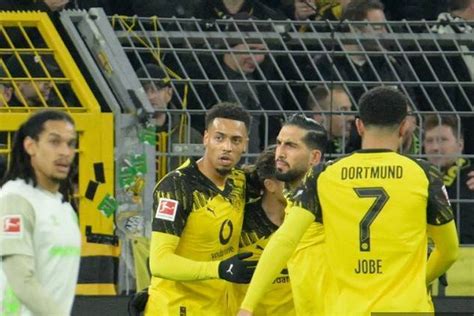
Introduction to 'Der Klassiker'
The term 'Der Klassiker' has become synonymous with one of the most electrifying rivalries in modern football, one that pits two of Germany’s most successful and popular clubs against each other: **Bayern Munich** and **borussia dortmund**. While not as ancient as some of Europe's other storied clashes, such as El Clásico or the Derby della Madonnina, 'Der Klassiker' has rapidly evolved into a fixture that captures global attention. Its origin and significance go beyond mere competition; it represents a modern cultural phenomenon shaped by the evolving landscape of German football, media influence, and the globalized sports market.
To understand the origin of 'Der Klassiker,' one must first delve into the historical trajectories of the two clubs involved. **Bayern Munich**, founded in 1900, has long been the dominant force in German football. Its rise to national and European prominence was steady but pronounced, particularly after the 1970s when the club secured multiple Bundesliga titles and European Cups under legendary figures like Franz Beckenbauer and Gerd Müller. In contrast, **Borussia Dortmund**, established in 1909, had a more turbulent early history, characterized by financial instability and sporadic success. However, the 1990s marked a turning point for Dortmund, as they emerged as genuine contenders under managers like Ottmar Hitzfeld, winning the UEFA Champions League in 1997 and asserting themselves as a force capable of challenging Bayern’s hegemony.
The rivalry between these two clubs gained its modern identity in the early 2010s, fueled by a combination of on-field drama and off-field narratives. This period saw Dortmund, under the dynamic leadership of Jürgen Klopp, rise to the pinnacle of German football. Dortmund’s high-intensity pressing style and youthful squad captured the imagination of fans and posed a genuine threat to Bayern’s dominance. Between 2010 and 2012, Dortmund won back-to-back Bundesliga titles and even humiliated Bayern in the 2012 DFB-Pokal final with a resounding 5-2 victory. These successes not only galvanized Dortmund’s fanbase but also intensified the competitive edge of the matches between the two clubs. The media, quick to capitalize on this burgeoning rivalry, began to frame their encounters as **the definitive clash of German football**, coining the term 'Der Klassiker'—a nod to the Spanish El Clásico between Real Madrid and Barcelona.
The significance of 'Der Klassiker' lies not just in the competitive stakes but also in its reflection of **Germany’s footballing identity post-reunification**. After the fall of the Berlin Wall in 1990, the Bundesliga underwent a transformation as clubs from the former East Germany integrated into the league system. However, the power dynamics remained centered in the west, with Bayern Munich and Borussia Dortmund becoming the standard-bearers of German football’s resurgence on the global stage. Their matches became more than just games; they were symbolic of the broader socio-economic competition between the industrial powerhouse of Bavaria (Bayern’s home) and the revitalized Ruhr region (Dortmund’s base). This dynamic added a layer of cultural weight to the rivalry, as it mirrored broader themes of regional pride, economic disparity, and national unity in post-reunification Germany.
Another critical aspect of 'Der Klassiker' is the **role of player transfers** between the two clubs, which has often heightened tensions. Bayern Munich, with its financial might, has a history of acquiring Dortmund’s star players, a practice that has fueled animosity among Dortmund supporters. Notable examples include the transfers of Robert Lewandowski, Mats Hummels, and Mario Götze—players who were instrumental in Dortmund’s success but later donned Bayern’s red. These transfers are often perceived as symbolic of Bayern’s dominance and Dortmund’s struggle to retain talent in the face of financial disparity. This dynamic has added a psychological dimension to 'Der Klassiker,' as matches are not just about points but also about pride and defiance.
From a **cultural perspective**, 'Der Klassiker' represents the modern face of German football’s global appeal. The Bundesliga, often praised for its affordable ticket prices and passionate fan culture, relies heavily on the magnetism of this rivalry to attract international audiences. The vibrant **Yellow Wall** at Dortmund’s Signal Iduna Park—the largest free-standing grandstand in Europe—and Bayern’s imposing Allianz Arena create a visual and auditory spectacle that defines the fixture. These stadiums are not just venues; they are temples of footballing passion, where the energy of the fans amplifies the stakes of the game. For international viewers, 'Der Klassiker' offers a window into the intensity of German football, blending traditional rivalries with the slick production values of modern sports broadcasting.
The global appeal of 'Der Klassiker' is also a product of **media and marketing strategies**. In the age of streaming platforms and social media, matches between Bayern and Dortmund are marketed as marquee events, often accompanied by hype-building campaigns, player interviews, and hashtag trends. This deliberate branding has helped elevate the fixture beyond its domestic significance, turning it into a must-watch event for neutral fans worldwide. Unlike older rivalries that grew organically over decades, 'Der Klassiker' demonstrates how modern football rivalries can be cultivated and amplified through deliberate narrative-building, media framing, and commercial interests.
However, it is important to note that some purists argue that 'Der Klassiker' lacks the historical depth of other European rivalries. They contend that its relatively recent coining as a "classic" is more a product of marketing than tradition. While this critique holds some merit, it overlooks the **organic growth of emotions and stakes** that have developed naturally over the past two decades. The repeated high-stakes encounters in Bundesliga title races, DFB-Pokal finals, and even Champions League clashes (such as the 2013 final at Wembley, won by Bayern) have imbued the rivalry with a sense of permanence. It is no longer just a label; it is a lived experience for players and fans alike.
The rivalry also underscores the **evolving nature of fandom in the digital age**. Supporters of both clubs, spread across the globe, engage in heated debates, create fan art, and participate in online communities that amplify the drama of 'Der Klassiker.' This globalized fandom has redefined what it means to support a club, as fans from Asia, Africa, and the Americas identify with either Bayern’s relentless efficiency or Dortmund’s underdog spirit. In this way, 'Der Klassiker' serves as a microcosm of how football has transcended national boundaries to become a truly global cultural phenomenon.
In summary, 'Der Klassiker' is more than a football match; it is a **convergence of history, culture, economics, and modern sports dynamics**. Its origin lies in the competitive friction between two clubs with distinct identities, but its significance extends to how it reflects and shapes German football’s place in the global sports ecosystem. Whether viewed as a manufactured rivalry or a genuine clash of titans, 'Der Klassiker' has cemented itself as a fixture that embodies the passion, pride, and spectacle of the beautiful game in Germany.
- The term captures the intensified rivalry of the 2010s sparked by Dortmund’s resurgence under Jürgen Klopp.
- It reflects post-reunification Germany’s socio-economic and footballing identity.
- Player transfers between the clubs have deepened the emotional stakes of the rivalry.
- Media and marketing have elevated 'Der Klassiker' into a global spectacle.
- The rivalry symbolizes the intersection of tradition and modern football’s commercial evolution.
Understanding the German Language Basics
The German language is known for its structured grammar and distinct phonetics, which can be both intriguing and challenging for non-native speakers. To understand the pronunciation of "der klassiker," a term often used in cultural and sporting contexts, it is essential to delve into the foundational aspects of German phonetics. This exploration will not only enhance our ability to pronounce the term correctly but also provide a deeper appreciation of how German sounds are formed and articulated.
German phonetics are rooted in a phonemic system that is highly consistent compared to many other languages. Each letter or letter combination has a specific sound associated with it, which makes German relatively predictable once the rules are understood. However, certain nuances in pronunciation, particularly related to stress, vowel length, and the influence of regional accents, can create variations that require closer attention.
The term "der klassiker" is composed of three primary elements: "der" (the definite article meaning "the"), "klassiker" (meaning "classic" or "a classic" in this context), and the capitalization of the noun, which is a standard feature of German grammar. To pronounce this term accurately, we must break it down into its phonetic components and consider how German phonetics influence each part.
Let us begin with the article "der." In German, the letter "d" is pronounced similarly to its English counterpart, as a voiced alveolar stop. However, the "e" in "der" is not a simple schwa sound as it might be in some English words. Instead, it is a short vowel sound, closer to the "e" in "bet" but slightly more rounded. The "r" at the end of "der" is another point of interest. In standard German (often referred to as Hochdeutsch or High German), the "r" is pronounced as a guttural or uvular sound, unlike the alveolar "r" common in many English dialects. This means that the "r" in "der" is produced further back in the throat, creating a softer, almost rolling effect. Therefore, "der" is pronounced as something close to "dehr" with a slight emphasis on the "e" sound.
Moving to "klassiker," we encounter a word that showcases several key features of German phonetics. The initial "k" is a voiceless velar stop, which is pronounced similarly in both German and English. The "l" is a voiced alveolar lateral approximant, again consistent across both languages. However, the double "s" in "klassiker" introduces a subtle but important distinction. In German, "ss" represents a sharp, unvoiced sibilant sound, akin to the "s" in "snake." This is distinct from the "ß" (Eszett) used in some German words, which also represents a sharp "s" sound but is used in specific grammatical contexts. In "klassiker," the double "s" ensures that the "s" sound is extended and clear.
The vowel "a" in "klassiker" is a short vowel sound, similar to the "a" in "cat" but slightly more closed. This is followed by "s," which as noted is pronounced sharply. The next vowel, "i," is a short vowel in this context, pronounced like the "i" in "sit." It is important to note that German vowels can be either short or long, and this distinction significantly impacts pronunciation. For instance, if the "i" in "klassiker" were long, it would sound more like the "ee" in "see," but here it remains short and crisp. The second "k" in "klassiker" is pronounced identically to the first, and the "e" that follows is another short vowel, similar to the "e" in "bet." Finally, the word ends with "r," which, as in "der," is pronounced with a guttural or uvular quality in standard German.
When we combine these elements, "klassiker" is pronounced approximately as "kla-see-ker," with the stress placed on the first syllable ("kla"). This stress pattern is typical in German, where the primary stress often falls on the first syllable of a word unless specific prefixes or suffixes dictate otherwise. Understanding this stress pattern is crucial because misplacing the stress can make the word sound unnatural to native speakers.
Now, let us consider the term as a whole: "der klassiker." In German, when a definite article like "der" precedes a noun, the two are often spoken in quick succession, with a slight blending of sounds. This blending is not a slurring of pronunciation but rather a natural flow that occurs because of the way German sentences are constructed. Thus, "der klassiker" might sound like "dehr kla-see-ker" when spoken fluidly. The article "der" retains its distinct "dehr" sound, but it transitions seamlessly into the noun without a noticeable pause.
One aspect of German phonetics that can be particularly challenging for learners is the concept of vowel length and how it interacts with consonants. In "klassiker," the short "a" and "i" sounds are followed by consonants that require precise articulation. For instance, the "k" sounds in "klassiker" must be articulated crisply, without the softening that might occur in some English words (e.g., the difference between "cat" and "caught"). This crispness is a hallmark of German pronunciation and is one reason why the language can sound sharp or clipped to non-native ears.
Another layer to consider is regional variation. While Hochdeutsch provides a standardized framework for pronunciation, there are regional accents and dialects across German-speaking countries (Germany, Austria, Switzerland, and parts of Italy and Belgium) that can influence how "der klassiker" is spoken. For example, in some southern German or Austrian dialects, the "r" sound might be more prominently rolled or pronounced further forward in the mouth, giving the term a slightly different flavor. Similarly, Swiss German might introduce a softer articulation of certain consonants, such as the "k" in "klassiker." However, in formal or international contexts, the Hochdeutsch pronunciation is the standard reference point.
To summarize the phonetic breakdown of "der klassiker":
- The "d" in "der" is a clear, voiced stop.
- The "e" in "der" is a short, slightly rounded vowel.
- The "r" in "der" is guttural or uvular.
- The "k" in "klassiker" is a crisp voiceless velar stop.
- The "l" is a clean alveolar approximant.
- The "a" is short and crisp.
- The double "s" is a sharp, unvoiced sibilant.
- The "i" is short, akin to "sit."
- The second "k" is identical to the first.
- The "e" before the final "r" is short and neutral.
- The final "r" is guttural, as in "der."
Understanding these elements provides a framework for pronouncing "der klassiker" with confidence. However, beyond the technical aspects, it is worth noting that German phonetics are deeply tied to the language's rhythm and intonation. German tends to have a steady, deliberate cadence, with clear enunciation of each syllable. This characteristic is particularly evident in compounds like "klassiker," where each part of the word is articulated distinctly rather than blended into a mush of sound, as can happen in faster-spoken English.
In practical terms, mastering the pronunciation of "der klassiker" requires practice not only of individual sounds but also of the rhythm and flow of the phrase. Listening to native speakers, particularly in contexts where the term is used (such as discussions of classic literature, art, or sports rivalries like football matches), can provide valuable auditory input. Tools like pronunciation guides, language apps, and recordings of German speakers can further aid in honing one's ability to reproduce the term accurately.
In conclusion, the pronunciation of "der klassiker" is a microcosm of German phonetics, showcasing the language's emphasis on clarity, crisp articulation, and consistent rules. By understanding the basics of German vowel sounds, consonant articulation, and stress patterns, one can approach this term—and indeed the broader German language—with greater confidence and precision.
Breaking Down 'Der Klassiker'
The phrase "Der Klassiker" has become synonymous with one of the most highly anticipated fixtures in German football, specifically the clash between Bayern Munich and Borussia Dortmund. While its meaning is clear to fans—“The Classic”—understanding the linguistic and cultural nuances of the phrase adds a layer of depth to its significance. To fully appreciate this term, we must break it down into its individual components: "Der" and "Klassiker." Each word carries its own weight in the German language, and together they form a term that encapsulates both tradition and spectacle in the world of sports.
Let us begin with “Der”, the definite article in German. In English, "Der" is equivalent to "the," but its usage in German is more complex due to the language's system of grammatical gender. Unlike English, where "the" is a one-size-fits-all article, German employs "Der," "Die," and "Das" depending on whether the noun is masculine, feminine, or neuter, respectively. The word "Der" is used here because "Klassiker" is a masculine noun. This specificity in German grammar reflects not just a linguistic rule but also an inherent cultural emphasis on precision. When we say "Der Klassiker," we are not merely pointing to an event; we are assigning it a definitive, almost reverent identity within the masculine framework of the language. This choice of article suggests that "Klassiker" is not just any classic but a specific, recognized entity—something singular and worthy of its title.
The term "Der" also carries a weight of tradition in German. Its use often implies a sense of authority or establishment. For instance, when we describe something as "Der Klassiker" in everyday German, we are not simply labeling it as a classic in a generic sense. Instead, we are elevating it to a status of canonical importance. In the context of football, this suggests that the match between Bayern Munich and Borussia Dortmund is not merely a regular game but one that has been culturally and historically recognized as a pinnacle of competition. The use of "Der" here is not accidental; it reinforces the idea that this fixture is a standard-bearer for excitement, rivalry, and excellence in German football.
Moving on to “Klassiker”, the noun itself is derived from the German word "Klassik," which means "classics" in English. However, its connotation extends beyond the literal translation. In German, "Klassiker" is used to describe something that is not only of high quality but also timeless and iconic. It can refer to works of literature, music, art, or even events that have stood the test of time and are regarded as exemplary. For example, Goethe’s "Faust" or Beethoven’s symphonies are often referred to as "Klassiker" in German culture because they represent the pinnacle of their respective art forms. When applied to football, "Klassiker" takes on a similar role—it signifies a match that is not only exciting in the moment but one that holds historical and cultural importance within the sport’s narrative.
The term "Klassiker" also implies a sense of tradition and legacy. In German, classics are not merely old or well-known; they are entities that have shaped their domain in a meaningful way. A "Klassiker" is something that others aspire to emulate or surpass. In the context of "Der Klassiker" in football, this suggests that the matches between Bayern Munich and Borussia Dortmund are not just thrilling for their on-field action but are also seen as touchstones for the evolution of German football itself. Each iteration of this fixture adds to its legacy, much like how a literary classic is reread and reinterpreted across generations. The term captures the expectation that these games are not only entertaining but also formative for the sport’s identity in Germany.
It is also worth noting that the word "Klassiker" carries a sense of universality in its meaning. While it is rooted in German, the concept of a "classic" is understood globally. This universality helps explain why "Der Klassiker" has resonated beyond Germany, becoming a term recognized by football fans worldwide. However, its German origin gives it a unique flavor. Unlike the English "classic," which can sometimes feel generic or overused, "Klassiker" feels more deliberate and weighty. This is partly due to the German language’s tendency to imbue words with gravitas through their structure and pronunciation. The very sound of "Klassiker" conveys a sense of importance—its hard "K" and rolling "R" give it a rhythmic and almost ceremonial quality when spoken.
The combination of "Der" and "Klassiker" is particularly effective because it pairs a definite article with a noun that suggests timelessness. This pairing creates a phrase that feels both specific and grand. When we say "Der Klassiker," we are not just naming a football match; we are invoking a tradition, a spectacle, and a cultural touchstone. This is why the term has become so ingrained in football lexicon—it encapsulates not only the rivalry between two teams but also the broader idea of what a "classic" fixture represents in the sport.
Another interesting aspect of "Klassiker" is its adaptability in German. While it often refers to something historical or established, it can also be used to describe something contemporary that has quickly gained classic status. This flexibility allows "Der Klassiker" to feel both rooted in history and relevant to the present. For instance, while the Bayern-Dortmund rivalry has deep historical roots, each new match labeled as "Der Klassiker" adds a modern layer to its legacy. This duality—of being both rooted in tradition and open to reinvention—makes the term dynamic and enduring.
From a phonetic perspective, the pronunciation of "Der Klassiker" is also worth exploring. In German, the phrase is pronounced as dair klah-see-ker, with the emphasis on the first syllable of "Klassiker." The pronunciation itself is crisp and authoritative, reflecting the seriousness with which the term is treated. For non-German speakers, this pronunciation might feel slightly challenging due to the guttural "R" and the precise vowel sounds, but it is a key part of why the term feels so distinct. Its pronunciation reinforces its identity as something uniquely German, adding to the mystique of the fixture it describes.
To further understand the phrase, we can look at how it contrasts with similar terms in other languages. For example, in English, we might simply say "the classic" to describe a significant match, but this lacks the specificity and cultural weight of "Der Klassiker." The German term feels more formal and intentional, as though it is reserving a special place for this particular rivalry within the lexicon of football. This contrast highlights how language shapes perception—while "the classic" might feel like a casual descriptor, "Der Klassiker" demands a certain level of respect and recognition.
- The use of "Der" emphasizes the masculine, authoritative nature of the noun it modifies.
- “Klassiker” implies not just a classic but a timeless and iconic event or work.
- The combination of the two creates a phrase that is both culturally specific and universally resonant.
In conclusion, the phrase "Der Klassiker" is far more than a simple label for a football match. Its components—“Der” and “Klassiker”—each contribute layers of meaning that elevate the term beyond its literal translation. "Der" assigns authority and specificity, while "Klassiker" conveys timelessness, tradition, and cultural significance. Together, they form a term that is both linguistically precise and emotionally evocative, capturing the essence of one of football’s most celebrated rivalries. Understanding this breakdown not only enhances our appreciation of the term but also deepens our understanding of how language and culture intertwine to create meaning in sports.
Correct Pronunciation Guide
The phrase "Der Klassiker" is a German term that translates to "The Classic" in English. It is widely used in sports, particularly in football (soccer), to refer to high-profile matches between two iconic teams, such as Bayern Munich and Borussia Dortmund in the Bundesliga. While the term is familiar to many fans worldwide, its pronunciation can be a point of confusion for non-German speakers. This section provides a step-by-step guide to pronouncing "Der Klassiker" correctly, breaking down its components phonetically and offering practical tips to master its articulation.
To begin, it is essential to recognize that German pronunciation is governed by specific rules that differ significantly from English. Unlike English, where spelling and pronunciation often diverge unpredictably, German is a highly phonetic language. This means that once you understand its phonetic principles, you can pronounce most words with confidence. "Der Klassiker" is no exception, but it does present some nuances worth exploring in detail.
Let us dissect the term into its two main parts: "Der" and "Klassiker". Each requires attention to its individual sounds and stress patterns.
Step 1: Pronouncing "Der" The word "Der" is the masculine definite article in German, equivalent to "the" in English. Its pronunciation is straightforward but requires attention to the vowel sound and the "r" at the end.
- The "D" sound: This is a voiced alveolar stop, similar to the English "D" in "dog." Place your tongue behind your upper teeth and release the sound cleanly.
- The "e" sound: In German, the "e" in "Der" is pronounced as a short vowel, akin to the "e" in the English word "red" but slightly more closed. Avoid elongating this vowel as you might in English. It is crisp and quick.
- The "r" sound: This is where many non-native speakers stumble. The German "r" is typically pronounced as a guttural or uvular sound, particularly in standard German (Hochdeutsch). It is not the rolled "r" of Spanish or the soft "r" of some English dialects. Instead, the sound originates in the back of the throat, almost like a soft gargle. For beginners, it is acceptable to approximate this with a very light "r" or even omit it entirely in casual speech, as some German speakers do in certain regions.
Phonetically, "Der" is pronounced as /deːr/, with the "e" being short and the "r" subtle. In some dialects or when spoken quickly, the "r" might be almost inaudible, resulting in something closer to /de/.
Step 2: Pronouncing "Klassiker" The second part of the phrase, "Klassiker," is more complex due to its multi-syllabic structure. Breaking it down syllable by syllable helps clarify its pronunciation:
- "Klas" - The first syllable starts with the "K" sound, which is identical to the English "K" in "kite." This is followed by the vowel combination "a-s." The "a" here is a short vowel, similar to the "a" in the English word "cat." The "s" is pronounced as a sharp, hissing sound, similar to the English "s" in "snake." Thus, "Klas" is pronounced as /klas/.
- "si" - The second syllable features the vowel combination "si." The "i" in German is pronounced as a long "ee" sound, similar to the "ee" in the English word "see." Therefore, "si" is pronounced as /zi/ (with the "z" being the same as in English).
- "ker" - The final syllable begins with the "k" sound, followed by the vowel "e" (a short vowel, as in "red"), and ends with the "r." As with "Der," the "r" in "ker" can be pronounced as a soft guttural sound or even softened further in rapid speech. The entire syllable is pronounced as /kər/, where the "ə" represents a schwa sound—a neutral, unstressed vowel common in German.
Together, "Klassiker" is pronounced as /ˈklasɪkər/, with the stress falling on the first syllable: KLAS-si-ker. The stress pattern is crucial because German tends to place emphasis on the first syllable of most words, and "Klassiker" follows this rule.
Step 3: Combining "Der" and "Klassiker" Now that we have analyzed the individual components, we can combine them into the full phrase. "Der Klassiker" is spoken as /deːr ˈklasɪkər/. Here are some key points to remember when saying the full term:
- Linking the words: In German, words are often linked smoothly in speech. When saying "Der Klassiker," the "r" in "Der" may blend into the "K" in "Klassiker," creating a fluid transition. This results in something like /deːrˈklasɪkər/ in natural speech.
- Stress and rhythm: The stress remains on the first syllable of "Klassiker." Saying the phrase with an unnatural emphasis on "Der" or the middle of "Klassiker" can make it sound awkward to native speakers.
To practice, try saying the phrase slowly at first: "DEHR KLAS-si-ker". Gradually speed up while maintaining the stress on "Klass" and keeping the "r" sounds light and natural.
Step 4: Using Audio References While written phonetic guides are helpful, hearing the phrase spoken by a native speaker can provide invaluable context. Many online resources, such as language learning platforms or sports commentary archives, include audio clips of "Der Klassiker" being pronounced. For instance:
- Search for sports broadcasts or interviews where German commentators discuss "Der Klassiker." These often provide authentic pronunciations in context.
- Use tools like Forvo or Google Translate's text-to-speech feature, which offer pronunciations of individual words and phrases. While not perfect, they can serve as a baseline for practice.
Listening to these references will help you internalize the rhythm and intonation of the phrase. Pay attention to how the stress falls naturally on "Klass" and how the "r" sounds are articulated in different contexts.
Step 5: Common Pitfalls and Tips Non-native speakers often make certain mistakes when attempting to pronounce "Der Klassiker." Here are some tips to avoid them:
- Avoid over-anglicizing the "r": Resist the temptation to pronounce the "r" as you would in English. The German "r" is softer and less prominent, especially at the end of a syllable.
- Do not stress the wrong syllable: Emphasizing "si" or "ker" instead of "Klas" can distort the phrase. Practice stressing the first syllable of "Klassiker" to ensure clarity.
- Mind the vowel lengths: The "a" in "Klas" is short, while the "i" in "si" is long. Misplacing these lengths can make the word sound unnatural.
Finally, remember that confidence is key. Even if your pronunciation is not perfect, most German speakers will appreciate the effort, especially when they recognize you are trying to respect their language.
In conclusion, mastering the pronunciation of "Der Klassiker" involves understanding its phonetic structure, practicing its individual components, and listening to native speakers for guidance. Whether you are discussing football or simply expanding your linguistic repertoire, this step-by-step approach ensures you can say the term with clarity and authenticity. With practice, you will not only pronounce it correctly but also gain a deeper appreciation for the nuances of the German language.
Common Mispronunciations and Mistakes
When discussing the pronunciation of "der klassiker," a term often associated with German football or classic cultural references, it is essential to recognize that many non-native speakers stumble over the subtleties of German phonetics. These mispronunciations stem from a lack of familiarity with the language's unique sounds, stress patterns, and orthographic rules. This section will explore the most common errors made by non-native speakers and provide actionable insights to help avoid them.
One of the most frequent mistakes is the mispronunciation of the initial article "der". Non-native speakers, particularly those whose first language is English, often default to pronouncing it as "dare" or "duhr", mirroring the way "the" is said in English. However, in German, "der" is pronounced with a clear, short e sound, similar to the e in the English word "red". The r at the end is also soft, almost unvoiced in some German dialects, particularly in northern Germany. This means the correct pronunciation is closer to "dehr" rather than the elongated or overly emphasized versions non-native speakers might use. To avoid this error, it is helpful to practice German’s short vowel sounds and recognize that the r is not as heavily rolled or pronounced as in languages like Spanish or Italian.
The second component, "klassiker," introduces a new set of challenges. A common error here is placing the stress on the wrong syllable. In German, the stress in "klassiker" falls on the first syllable: "KLAH-sik-er". Non-native speakers, especially those accustomed to English stress patterns, might place the emphasis on the second syllable, saying something like "kla-SEE-ker". This mistake not only alters the rhythm of the word but also makes it sound distinctly non-German. The issue often arises because English has a more flexible stress system, whereas German tends to have more predictable stress placement, usually on the first syllable of compound words or borrowed terms. To correct this, learners should focus on listening to native speakers and mimicking the natural rhythm of German words. Tools like pronunciation apps or audio guides can provide valuable practice in this area.
Another significant issue lies in the consonant sounds of "klassiker." The double s in the middle of the word is often misinterpreted. Some non-native speakers assume it should be pronounced like the English "z" sound, resulting in something like "klah-zik-er". However, in German, the double s (ss) is a sharp, hissing s sound, similar to the s in the English word "hiss". Additionally, the k sound in "klassiker" is a hard, guttural k, which should be pronounced distinctly without softening into a g or glottal stop. Beginners can practice this by breaking the word into its phonetic components: k, l, a, s, s, i, k, e, r, ensuring each sound is articulated clearly. Listening to how native speakers handle these consonants in context can help reinforce proper enunciation.
A less obvious but equally important error involves the vowel sounds in "klassiker." The a in the first syllable is often elongated by non-native speakers, turning it into something resembling the a in the English word "class". However, in German, the a in "klassiker" is a short, crisp sound, akin to the a in the English word "cat". This distinction is crucial because German vowel lengths can change the meaning of words or make them sound unnatural. For example, elongating the a might confuse listeners or make the word sound less polished. Practicing short vowel drills in German can help non-native speakers internalize this distinction and avoid over-enunciating or misrepresenting the word.
The final syllable, "-er," is another area where non-native speakers often falter. In German, the -er ending is not pronounced like the English "-er" in words like "teacher" or "louder". Instead, it is a neutral, unstressed sound, similar to the schwa sound ("uh") in English. This means "klassiker" should end with a soft, almost muted "uh" rather than a clearly enunciated "er". Beginners often over-pronounce this ending, which can make the word sound awkward or overly formal. To address this, it is useful to practice schwa sounds in other German words, such as "Mutter" (mother) or "Bruder" (brother), where the -er ending is similarly understated.
A related challenge for non-native speakers is the tendency to over-anglicize the word by applying English intonation patterns. For example, some might say "der klassiker" with a rising intonation at the end, as if asking a question, which is not typical in German declarative sentences. German has a flatter intonation pattern compared to English, particularly when stating facts or naming objects. To avoid this, learners should practice saying the phrase in a neutral tone, ensuring that the stress and rhythm remain distinctly German rather than influenced by their native language habits.
Another subtle but impactful mistake is failing to recognize the role of umlauts and related sound shifts in similar contexts. While "klassiker" does not contain an umlaut, understanding how umlauts affect nearby sounds in German can help non-native speakers develop a better ear for the language's phonetic nuances. For instance, if a speaker confuses "klassiker" with a word like "Klassik" (classical), they might unintentionally blend the two and mispronounce both. This highlights the importance of context and familiarity with related vocabulary when learning pronunciation. Reading German texts aloud and focusing on how individual words sound in isolation and in sentences can help reinforce these skills.
To summarize and provide practical tips for avoiding these mistakes:
- Focus on short vowel sounds like the e in "der" and the a in "klassiker." Avoid elongating these vowels as you might in English.
- Practice stress placement by emphasizing the first syllable of "klassiker" and ensuring the rhythm of the word aligns with German conventions.
- Articulate consonants clearly, particularly the sharp s in "ss" and the hard k sound at the beginning of the word.
- Softly pronounce the -er ending as a schwa sound rather than a full "er" as in English.
- Listen and mimic native speakers through audio resources, videos, or language exchange partners to develop an intuitive sense of German pronunciation.
Finally, it is worth noting that immersion and repetition are key to mastering the pronunciation of "der klassiker" or any German phrase. Non-native speakers should not be discouraged by initial difficulties but should instead view them as opportunities to deepen their understanding of the language. By paying attention to these details and practicing consistently, even complex terms like "der klassiker" can become second nature, allowing learners to communicate with greater confidence and authenticity.
Role of 'Der Klassiker' in Football Contexts
The term 'Der Klassiker' has become a staple in football lexicon, particularly in the context of German football, where it signifies the high-stakes clashes between Bayern Munich and Borussia Dortmund. While the phrase is borrowed from the world of classical music to denote something of great significance or a "classic," its use in football has evolved into a nuanced cultural and linguistic phenomenon. Understanding how 'Der Klassiker' is pronounced and employed in sports commentary, media, and fan conversations offers a window into its role as a unifying and emblematic term in football discourse.
In sports commentary, 'Der Klassiker' is often used as a shorthand to elevate the narrative around matches between Bayern Munich and Borussia Dortmund. Pronounced as "dehr klah-see-ker," the term carries a weight that distinguishes these fixtures from regular Bundesliga games. Commentators frequently emphasize the term to signal to viewers that they are about to witness a match of heightened importance. This pronunciation, with its distinctly German inflection, serves two purposes: it respects the linguistic origin of the term and underscores the international appeal of the rivalry. Unlike generic phrases like "big game" or "top-of-the-table clash," 'Der Klassiker' conveys a sense of history and tradition, positioning the match as part of a continuum rather than an isolated event. For instance, when a commentator says, "This is not just another game; this is Der Klassiker," the pronunciation itself reinforces the idea that this rivalry is on par with other globally recognized football showdowns like El Clásico or the Manchester Derby.
The media plays a significant role in shaping how 'Der Klassiker' is perceived and pronounced. Sports outlets, both in Germany and internationally, often use the term in headlines, pre-match analyses, and post-match reviews to create a sense of anticipation. For example, articles with titles such as "The Build-Up to Der Klassiker" or "What Makes Der Klassiker Special?" are common. Here, the pronunciation is not merely a matter of correctness but a tool to set the tone. By using "Der Klassiker" instead of alternative descriptions, media outlets signal to their audience that this is a marquee event. Moreover, the pronunciation of the term in English-speaking media often retains its German roots rather than being Anglicized (e.g., "the classic"), which demonstrates a conscious effort to preserve its authenticity. This choice reflects the globalized nature of football, where maintaining the cultural identity of terms like 'Der Klassiker' is seen as a nod to the sport's international fanbase. It also allows non-German speakers to engage with the term in its original form, fostering a sense of inclusivity and respect for the sport's diverse audience.
In fan conversations, 'Der Klassiker' takes on a life of its own, shaped by the emotional investment of supporters. Pronunciation becomes a marker of fandom and identity. For German fans, saying "dehr klah-see-ker" correctly is a point of pride, signaling their connection to the game's cultural roots. For international fans, particularly those who do not speak German, the term may initially pose a challenge. However, its repeated use in media and commentary normalizes its pronunciation, turning it into a recognizable and celebrated phrase. Online forums, social media platforms, and fan groups often see debates or tutorials on how to say 'Der Klassiker' correctly. These discussions are not merely about linguistic accuracy but about belonging—fans want to feel that they are part of the tradition and excitement surrounding the fixture. This shared linguistic engagement fosters a sense of community among supporters, regardless of their geographical location.
Beyond its functional use, 'Der Klassiker' serves as a cultural shorthand in football narratives. The term encapsulates the historical rivalry, the contrasting styles of play between Bayern and Dortmund, and the broader socio-economic dynamics of German football. When commentators or fans use the term, they are not just referring to a match; they are invoking a broader context. For instance, the mention of 'Der Klassiker' often brings to mind the tactical battles between managers, the individual brilliance of players like Robert Lewandowski or Marco Reus, and the contrasting fan cultures of the Südkurve (Bayern's south stand) and the Yellow Wall (Dortmund's famous terrace). This layered meaning is reinforced by the pronunciation, which acts as a verbal cue to recall these associations. In this sense, 'Der Klassiker' is more than a label—it is a vessel for storytelling, allowing commentators and fans to weave a richer narrative around the fixture.
The role of 'Der Klassiker' in global football discourse also highlights its adaptability. While the term is rooted in German football, its pronunciation and usage have transcended national boundaries. In countries where football is a major sport, such as England, Spain, or Brazil, 'Der Klassiker' is often discussed with the same reverence as domestic rivalries. This global adoption of the term is facilitated by its distinct pronunciation, which sets it apart from other rivalries that might be described in generic terms. For example, while "the North London Derby" or "El Tráfico" are region-specific, 'Der Klassiker' has an almost universal appeal because of its linguistic uniqueness and the global stature of Bayern and Dortmund. Media outlets and commentators in non-German-speaking regions often make a point of pronouncing the term correctly to signal their understanding of its cultural significance.
Another interesting aspect of 'Der Klassiker' in fan and media contexts is its commercial implications. The term is not just a descriptor but a brand in itself. Sponsors, broadcasters, and clubs capitalize on its marketability by using it extensively in promotional material. Advertisements for 'Der Klassiker' often feature dramatic voiceovers where the term is pronounced with deliberate emphasis, creating a sense of drama and anticipation. This commercialization further embeds the term in the football lexicon, as fans begin to associate its pronunciation with the excitement of the event. For instance, a pre-match promo might declare, "This Saturday, witness Der Klassiker—the clash of titans," with the pronunciation reinforcing the idea of grandeur and spectacle.
It is also worth noting how historical context influences the use of 'Der Klassiker' in commentary and media. The term has gained prominence in the modern era of German football, particularly since the early 2010s when Dortmund's resurgence under Jürgen Klopp brought them into direct competition with Bayern's dominance. This period saw 'Der Klassiker' transition from a loosely used phrase to a firmly established term in football vocabulary. The pronunciation of 'Der Klassiker' in this era became a marker of the rivalry's evolution—from a competitive fixture to a globally recognized spectacle. The media and fans began to use the term more frequently as the matches between Bayern and Dortmund started to carry implications for league titles, Champions League qualification, and even European bragging rights.
In summary, the role of 'Der Klassiker' in football contexts is multifaceted. Its pronunciation serves as a linguistic bridge between the cultural origins of the term and its global audience. In sports commentary, it elevates the narrative of the match, positioning it as a must-watch event. In media, it is a tool for storytelling and brand-building, while in fan conversations, it fosters a sense of identity and community. Through its distinct pronunciation and widespread adoption, 'Der Klassiker' has become more than a phrase—it is a symbol of the drama, history, and global appeal of one of football's most celebrated rivalries.
Cultural Nuances of Pronunciation
The phrase "Der Klassiker," which translates to "The Classic" in English, is widely used in German football to refer to the high-profile match between Bayern Munich and Borussia Dortmund. While the term itself has become a staple in the lexicon of football enthusiasts worldwide, its pronunciation can vary significantly depending on the speaker's regional German accent. This section delves into the cultural nuances of how regional differences in German pronunciation shape the way "Der Klassiker" is articulated, offering a deeper understanding of how language reflects identity and geography in Germany.
To begin with, it is important to recognize that Germany is a linguistically diverse country with a range of dialects and accents that differ not only by region but often by city or even village. The standard German pronunciation, known as Hochdeutsch (High German), is the formal and widely accepted form taught in schools and used in media. However, in everyday speech, many Germans speak with regional accents influenced by their local dialects. These dialects—such as Bavarian, Saxon, Swabian, and Low German—can alter not only the rhythm and intonation of words but also the specific sounds of vowels and consonants. This variability naturally extends to how "Der Klassiker" might be pronounced in different parts of the country.
In Bavaria, where Bayern Munich is based, the local accent is characterized by softened consonants and a tendency to elongate vowel sounds. For instance, the word Klassiker might be spoken with a slightly drawn-out "a" sound, making it closer to "Klaassiker" rather than the crisper "Klassiker" of Hochdeutsch. The "r" at the end of the word is also likely to be pronounced more softly or even dropped altogether in casual Bavarian speech, rendering it closer to "Klaassike." This is reflective of the Bavarian tendency to reduce the emphasis on hard "r" sounds, particularly at the ends of words. For fans of Bayern Munich, who are deeply embedded in this regional linguistic context, this softer pronunciation may feel more natural and authentic when referring to their team's marquee matches.
Conversely, in North Germany, where Low German (Plattdeutsch) influences the local speech patterns, the pronunciation of "Der Klassiker" might take on a sharper and more clipped quality. Low German is known for its distinct vowel sounds and the preservation of older linguistic features that differ from High German. In this context, the "a" in Klassiker might be pronounced with a shorter, more abrupt quality, making it sound closer to "Klassker" with a harder "k" sound at the beginning. Additionally, the "r" sound in North German accents is often pronounced with a rolled or slightly guttural quality, which can give the word a more forceful and energetic tone. This might resonate with supporters of teams like Hamburger SV or Werder Bremen, even if these teams are not directly involved in "Der Klassiker," as it aligns with their regional speech habits.
In the Ruhr region, home to Borussia Dortmund, the local accent is influenced by a mix of Rhineland and Westphalian dialects. Here, the pronunciation of "Der Klassiker" might include a slight elongation of the "i" sound in Klassiker, making it sound like "Klassikeeer" with emphasis on the "ee." This subtle shift can reflect the region's working-class identity and its historically industrial character, where speech often carries a straightforward and unpretentious quality. Moreover, the "r" sound in this region is often pronounced with a slight roll or tap, giving the word a rhythmic quality that mirrors the energy and passion of the Ruhr's football culture. For Dortmund fans, this slightly extended pronunciation might evoke a sense of communal pride and rivalry when discussing matches against Bayern Munich.
Moving to Eastern Germany, particularly in areas influenced by the former East German linguistic traditions, the pronunciation of "Der Klassiker" can take on yet another flavor. Eastern German accents often feature a flatter intonation and a tendency to shorten vowel sounds. Here, "Klassiker" might be spoken with less emphasis on the second syllable, sounding more like "Klassikah" with a sharper and quicker delivery. This reflects a broader pattern in Eastern German speech, where efficiency and simplicity in pronunciation are valued. For fans in this region, the way they say "Der Klassiker" might subtly convey a sense of detachment or neutrality, especially if their local teams are not as emotionally invested in the Bayern-Dortmund rivalry.
Another interesting aspect to consider is how Swiss German and Austrian German accents might influence the pronunciation of "Der Klassiker," given their geographic and cultural proximity to Germany. In Switzerland, for example, the "r" sound is often pronounced with a guttural quality that is quite distinct from the softer Bavarian "r" or the rolled Rhineland "r." An Austrian speaker, on the other hand, might emphasize the "a" sound in a way that leans closer to "Klaussiker," with a more open and rounded vowel. These variations, while not strictly German, illustrate how the concept of "Der Klassiker" extends beyond Germany's borders and takes on new dimensions in the broader German-speaking world.
It is also worth noting how media and broadcasting play a role in shaping the standardized pronunciation of "Der Klassiker." Sports commentators and journalists often default to Hochdeutsch when discussing football matches, as this form is understood by the widest audience. However, regional broadcasters or local fan channels may intentionally lean into their own accents to foster a sense of identity and connection with their audience. For instance, a Bavarian commentator might emphasize the softer "a" sound in "Klassiker," while a Ruhr-based broadcaster might lean into the elongated "i" to resonate with local fans. This interplay between standard and regional pronunciations highlights how language can be both a unifying and dividing factor in football culture.
The influence of immigrant communities in Germany also adds a layer of complexity to the pronunciation of "Der Klassiker." In cities like Berlin, where a diverse population includes Turkish, Arabic, and Eastern European communities, the word might be spoken with an accent that reflects the speaker's first language. For example, a Turkish-German speaker might pronounce the "r" with a strong trill, while an Arabic-speaking fan might elongate the vowel sounds in a way that differs from native German speakers. These variations are not "incorrect" but rather a testament to the multicultural fabric of modern Germany and how football serves as a bridge between different cultural identities.
Finally, it is important to consider how generational shifts and the influence of social media might shape the pronunciation of "Der Klassiker." Younger fans, particularly those who consume football content on platforms like TikTok or YouTube, might adopt a more globalized or anglicized pronunciation of the term. For instance, they might say "Der Klassiker" with a neutral, internationally understandable accent that lacks the nuanced regional inflections of older generations. This trend reflects how language evolves in a digital age, where localized accents are sometimes flattened in favor of broader accessibility.
- Regional accents like Bavarian, Low German, and Ruhr German each impart unique qualities to the pronunciation of "Der Klassiker," from softened consonants to elongated vowels.
- Eastern German accents often emphasize efficiency, resulting in flatter and quicker deliveries of the term.
- Swiss and Austrian variations demonstrate how the concept of "Der Klassiker" extends into neighboring German-speaking regions.
- Immigrant communities and younger generations introduce new dimensions to how the term is spoken, reflecting Germany's multicultural and digital landscape.
In conclusion, the pronunciation of "Der Klassiker" is far from uniform and is deeply influenced by the rich tapestry of regional German accents. These variations are not merely linguistic curiosities but are deeply tied to the cultural, historical, and social identities of different regions. Understanding these nuances provides a richer appreciation of how language reflects the diversity of German football culture and the ways in which even a simple phrase can carry layers of meaning and identity.
Comparison with Similar Terms
The term 'Der Klassiker' has become a widely recognized phrase in the world of football, particularly when referring to matches between Bayern Munich and Borussia Dortmund. However, to fully grasp its significance and pronunciation, it is helpful to compare it with other German football phrases that share a similar cultural or linguistic backdrop. This comparison not only provides context but also deepens our understanding of how 'Der Klassiker' fits into the broader lexicon of German football terminology.
One of the first points of comparison is the phrase Der Fußballklassiker, which translates directly to "The Football Classic." This term is often used in a more generic sense to describe any high-profile or historic match in German football. Unlike 'Der Klassiker,' which is specific to the Bayern-Dortmund rivalry, Der Fußballklassiker can be applied to other significant games, such as those involving traditional rivals like Hamburg and Werder Bremen or even international fixtures involving the German national team. The pronunciation of this term is similar to 'Der Klassiker,' with the emphasis on the first syllable of "Klassiker," but the added specificity of "Fußball" (football) broadens its scope. This distinction underscores how 'Der Klassiker' has a more focused and exclusive connotation tied to a singular rivalry rather than a general "classic" match.
Another interesting term to consider is Revierderby, which refers to matches between teams from the Ruhr region, most famously Borussia Dortmund and Schalke 04. The Revierderby is steeped in local pride and industrial history, reflecting the working-class roots of the region. While 'Der Klassiker' emphasizes a national or even international spectacle between two of Germany's most successful clubs, the Revierderby is more localized and community-focused. The pronunciation of 'Revierderby' differs significantly from 'Der Klassiker,' with a stress on the "Revier" (meaning "region" or "district") and a softer ending in "derby." This comparison highlights how German football phrases can vary in scope—while 'Der Klassiker' is about a clash of titans on a grand stage, the Revierderby represents a deeply personal and regional contest. The differences in pronunciation and usage here demonstrate how German football phrases adapt to the scale and nature of the rivalry they describe.
A third term worth examining is Elfmeterschießen, which refers to a penalty shootout. While this phrase is not a direct rival-focused term like 'Der Klassiker,' it is a common part of German football vocabulary and provides a contrast in structure and usage. The pronunciation of Elfmeterschießen is more complex, with a rolling cadence that reflects the compound nature of German words. Unlike 'Der Klassiker,' which is succinct and easy for non-German speakers to approximate, Elfmeterschießen can be more challenging due to its length and specific sounds. This contrast illustrates how German football phrases range from accessible and marketable terms like 'Der Klassiker' to more intricate and technical ones like Elfmeterschießen. The simplicity of 'Der Klassiker' makes it more internationally palatable, which may explain its adoption in global football discourse compared to more niche or technical terms.
Another phrase that offers a useful comparison is Abstiegskampf, which translates to "relegation battle." This term is used to describe the intense struggle of teams at the bottom of the league table trying to avoid demotion to a lower division. While 'Der Klassiker' is about the pinnacle of success and prestige, Abstiegskampf represents the opposite end of the spectrum—survival and endurance. The pronunciation of Abstiegskampf involves a harder "k" sound and a more guttural emphasis, contrasting with the smoother flow of 'Der Klassiker.' This juxtaposition shows how German football vocabulary captures both the highs and lows of the sport. While 'Der Klassiker' is aspirational and celebratory, Abstiegskampf is gritty and grounded in the realities of competition.
It is also worth considering how 'Der Klassiker' compares to internationally recognized phrases like El Clásico, the term for matches between Barcelona and Real Madrid. While 'Der Klassiker' and El Clásico are both used to describe flagship rivalries, the linguistic and cultural contexts differ. El Clásico has a Spanish origin and is pronounced with a distinctly Iberian flair, whereas 'Der Klassiker' carries the crisp, efficient tone of German pronunciation. The similarity lies in how both terms have been adopted as branding tools to heighten the appeal of these matches on a global stage. However, 'Der Klassiker' is arguably less romanticized than El Clásico, which is often associated with a more flamboyant and stylistic brand of football. This difference in tone and branding highlights how 'Der Klassiker' serves as a more understated yet equally impactful phrase in the German football lexicon.
Another layer of comparison can be drawn with Nordderby, which refers to matches between northern German teams like Hamburger SV and Werder Bremen. The Nordderby is another example of a regional rivalry, much like the Revierderby, but it is less prominent on the national stage compared to 'Der Klassiker.' The pronunciation of Nordderby is smoother and less complex than some of the other terms, but it lacks the universal appeal of 'Der Klassiker.' This comparison shows how the prominence of a rivalry influences the adoption and recognition of its associated phrase. 'Der Klassiker' benefits from the global profiles of Bayern Munich and Borussia Dortmund, while terms like Nordderby remain more niche due to the lower international visibility of the teams involved.
A final term to consider is Meisterrennen, which refers to the "title race" in the Bundesliga. This phrase captures the competitive chase for the championship and is often used in discussions about the league's top teams, including Bayern Munich and Borussia Dortmund. While 'Der Klassiker' is about a specific match or rivalry, Meisterrennen is a broader concept that encompasses the season-long narrative of competition. The pronunciation of Meisterrennen is slightly more fluid than 'Der Klassiker,' with a rhythmic quality that reflects its dynamic nature. This comparison illustrates how German football phrases can either zoom in on a singular event ('Der Klassiker') or take a panoramic view of the season's drama (Meisterrennen).
These comparisons reveal that 'Der Klassiker' occupies a unique space in German football terminology. It is neither as regionally focused as the Revierderby or Nordderby, nor as broadly generic as Der Fußballklassiker. Instead, it strikes a balance—specific enough to denote a marquee rivalry yet broad enough to resonate with international audiences. The pronunciation of 'Der Klassiker' is also a factor in its appeal; its simplicity and directness make it easy to adopt in global football conversations. In contrast, more complex terms like Elfmeterschießen or Abstiegskampf remain rooted in their technical or localized contexts.
In summary, comparing 'Der Klassiker' with other German football phrases provides a richer understanding of its pronunciation, usage, and cultural significance. While terms like Revierderby and Nordderby emphasize regional identity, and Meisterrennen captures the broader competitive landscape, 'Der Klassiker' stands out as a phrase that encapsulates the essence of a premier rivalry in a way that is both accessible and globally marketable. This interplay of specificity and universality is what makes 'Der Klassiker' not just a phrase but a symbol of German football's ability to blend tradition with modern appeal.
Practical Tips for Practicing Pronunciation
Mastering the pronunciation of "der klassiker" can be a rewarding endeavor, especially for those interested in German culture, sports, or linguistics. This term, which translates to "the classic" in English, often refers to iconic events or matchups, such as the famed football rivalry between Bayern Munich and Borussia Dortmund. To pronounce it correctly, one must navigate the intricacies of German phonetics, which differ significantly from English. Below are practical tips and actionable advice to help you perfect your pronunciation of this term.
The first step in practicing the pronunciation of "der klassiker" is understanding its component sounds. Let’s break it down:
- "der": This is a definite article in German, pronounced as "dehr" (with a short 'e' sound as in "red" and a soft, rolled 'r' at the end). English speakers often overemphasize the 'r' sound, but in German, it is much subtler. Practice by saying "dehr" slowly, keeping the 'r' light and almost implied rather than heavily rolled.
- "klas": The 'k' is a hard, guttural sound similar to the 'k' in "kite." The 'a' in "klass" is an open 'a' sound, akin to the 'a' in "father." Many non-native speakers mispronounce this as a flat 'a' (like in "cat") or overstress the 's,' making it sound like "klaSS." Instead, aim for a clean, crisp "klas" with the 's' sounding like the 's' in "sun."
- "siker": This part can be tricky because of the 's' and 'k' combination. The 's' here is pronounced like the 'z' in "zoo," not the 's' in "sit." The 'i' is a long vowel sound, similar to the 'ee' in "seen." Finally, the 'ker' ends with a soft 'k' sound followed by an implied 'uh' sound, much like the ending of "baker" in English. Practice saying "zee-ker" to get a feel for this segment.
Now that we have dissected the term phonetically, let’s move on to techniques for practicing these sounds effectively. Pronunciation is as much about muscle memory as it is about auditory comprehension, so repetition and focused practice are key.
One highly effective method is to use audio resources. Search for German-language recordings or videos where the term "der klassiker" is used in context. For example, sports commentators often say this phrase during match previews or recaps. Listen closely to how native speakers articulate the term. Pay attention to the rhythm, stress, and intonation. Tools like YouTube, language learning apps (such as Duolingo or Pimsleur), or even podcasts dedicated to German football can be invaluable. While listening, try to mimic the pronunciation immediately after hearing it. This technique, known as shadowing, helps train your vocal muscles to replicate the sounds more naturally.
Another useful approach is to practice with phonetic transcription. While "der klassiker" is not overly complex, visualizing its sounds in the International Phonetic Alphabet (IPA) can provide clarity. The term can be roughly transcribed as /deːɐ̯ klaːsɪkɐ/. Here’s what this means:
- /deːɐ̯/: The 'eː' represents the long 'e' sound, and the 'ɐ̯' indicates a soft, central vowel sound that follows the 'e.' This is close to "dehr" in practical terms.
- /klaːs/: The 'aː' is a long 'a' sound, which you can practice by holding the 'a' in "father" for a moment before moving to the 's.'
- /sɪkɐ/: The 'ɪ' is a short 'i' sound (like in "bit"), and the 'ɐ' at the end is a schwa sound, which is a neutral, relaxed vowel often found in unstressed syllables.
If you’re unfamiliar with IPA, don’t worry—many online tools and apps can provide audio examples alongside IPA transcriptions. Practicing with these can help you internalize the sounds without overthinking them.
Next, consider the role of stress and intonation in German. Unlike English, where stress patterns can vary widely, German tends to place stress on the first syllable of a word. In "der klassiker," the stress falls on the first syllable of "klassiker" (i.e., "KLA-siker"). Practice saying the term with this stress pattern: "DEHR KLA-siker." Avoid placing equal emphasis on all syllables, as this can make your pronunciation sound unnatural. A good exercise is to clap or tap your hand on a surface while saying the term, emphasizing the stressed syllable with a louder clap.
Another critical aspect of perfecting "der klassiker" is understanding the role of mouth and tongue placement. German sounds often require slightly different mouth shapes than English. For instance:
- The 'r' in "der" is produced in the back of the throat, rather than with the tip of the tongue as in English. Try relaxing your tongue and letting the sound resonate in your throat.
- The 's' in "klass" should be pronounced with the tip of your tongue just behind your upper teeth, creating a crisp sound.
- The 'k' in "klas" is made by closing off air at the back of your mouth, so practice clearing your throat slightly to get comfortable with this guttural stop.
To refine these movements, try practicing in front of a mirror. Watch how your mouth moves as you say each part of the word. Are you opening your mouth wide enough for the 'a' in "klas"? Is your tongue in the correct position for the 'r' in "der"? Visual feedback can be immensely helpful in identifying and correcting subtle errors.
A less conventional but highly effective method is to incorporate the term into daily use. If you’re learning German or simply want to master this phrase, find ways to use it in sentences. For example:
- "Ich freue mich auf den nächsten der klassiker." (I’m looking forward to the next der klassiker.)
- "Der klassiker ist immer spannend." (Der klassiker is always exciting.)
Using the term in context forces you to think about its pronunciation within a broader linguistic framework. It also helps you associate the phrase with real-world scenarios, making it more memorable.
For those who want to take their practice further, consider engaging in interactive exercises. Many language learning platforms offer pronunciation drills where you record yourself saying a word or phrase and compare it to a native speaker’s version. This immediate feedback can be invaluable for fine-tuning your articulation. Alternatively, find a language exchange partner or tutor who can provide direct feedback on your pronunciation. Sometimes, hearing "That ‘s’ needs to sound more like a ‘z’" from a real person can clarify issues that audio alone cannot.
Finally, let’s address common pitfalls that English speakers encounter when pronouncing "der klassiker." One frequent mistake is over-anglicizing the term, such as pronouncing it as "der CLASS-iker" with a hard emphasis on the 's' and a flat 'a.' Another is neglecting the subtlety of the German 'r,' replacing it with a harsh English 'r.' Be mindful of these tendencies and actively work to minimize them by revisiting the earlier tips on individual sounds and stress patterns.
In summary, practicing the pronunciation of "der klassiker" involves a combination of listening, mimicking, analyzing phonetics, and using the term in context. By breaking down the sounds, focusing on stress and intonation, and leveraging tools like audio resources and interactive platforms, you can develop a confident and accurate pronunciation. With consistent practice, you’ll not only say "der klassiker" like a native speaker but also gain a deeper appreciation for the nuances of the German language.
Conclusion and Takeaways
The topic of "Der Klassiker pronunciation" might seem niche or even trivial to some, but it carries a surprising depth of importance when viewed through the lens of cultural appreciation, linguistic precision, and professional credibility. To conclude this exploration, we must distill the key points raised earlier and emphasize why mastering the correct pronunciation of this term—and similar culturally significant phrases—matters so much in a globalized world.
First and foremost, it is essential to understand that "der klassiker" is not just a phrase; it is a term imbued with history, identity, and context. Originating from German, it translates to "the classic" in English. However, the literal translation barely scratches the surface of its cultural weight. In sports, particularly football (or soccer, depending on your regional dialect), "der klassiker" refers to iconic matchups between storied teams—such as Bayern Munich versus Borussia Dortmund in Germany. To native German speakers, this term embodies a sense of tradition, rivalry, and excellence. Mispronouncing it, therefore, can inadvertently diminish the respect one intends to show toward the concept and its cultural roots.
The correct pronunciation of "der klassiker" involves adhering to standard German phonetics. The "d" in "der" is soft, similar to the English "d" but slightly crisper. The "er" at the end of "der" is pronounced more like "uh" rather than a fully articulated "er" as in English. "Klassiker" begins with a sharp "k" sound, followed by "lah-see-ker," with the emphasis on the first syllable. The "a" in "klassiker" is an open vowel, approximating the "ah" sound, and the "i" in the final syllable is a short "ee." This phonetic breakdown might seem overly detailed, but it underscores a broader point: pronunciation is not merely about getting sounds right—it is about signaling awareness and respect for the language and its speakers.
One might ask, why is this level of detail necessary for a term that many non-German speakers encounter only occasionally? The answer lies in the concept of credibility. In a world where cross-cultural interactions are increasingly common, the ability to pronounce terms correctly is a marker of professionalism and cultural sensitivity. Imagine a scenario where a sports commentator, analyst, or even a casual fan mispronounces "der klassiker" during a discussion. To a native German speaker or someone well-versed in the term's significance, this misstep could suggest a lack of preparation or, worse, a dismissive attitude toward the culture behind the term. In contrast, taking the time to learn and use the correct pronunciation signals effort, respect, and a willingness to engage with the subject matter on its own terms.
This concept of credibility extends beyond sports into other domains where "der klassiker" might appear. For instance, in literature, art, or even product branding, the term might be used to denote something timeless or iconic. A marketing professional presenting a campaign centered around a "klassiker" product line would do well to ensure their pronunciation aligns with the intended gravitas of the term. Missteps here could undermine the perceived authenticity of the campaign, especially in markets where German cultural influence is significant. This is not to suggest that a single mispronunciation spells disaster, but repeated or blatant errors can erode trust and authority over time.
Another takeaway from this discussion is the broader value of linguistic mindfulness. Pronouncing "der klassiker" correctly is not just about avoiding mistakes; it is about embracing an opportunity to learn and grow. Language is a gateway to understanding culture, and when we take the time to pronounce foreign terms accurately, we signal a deeper engagement with the people and ideas those terms represent. This is particularly important in an era where globalization often flattens cultural nuances. By prioritizing correct pronunciation, we push back against the homogenization of language and reinforce the idea that diversity—even in something as small as a phrase—matters.
It is also worth considering the role of technology and accessibility in supporting correct pronunciation. Tools like online pronunciation guides, language learning apps, and even AI-driven transcription services make it easier than ever to learn how to say terms like "der klassiker" properly. However, these tools are only as effective as the intent behind their use. A casual user might rely on them superficially, while a committed learner will dig deeper, practicing not just the sounds but also the context in which the term is used. This distinction highlights a key point: correct pronunciation is not solely about technical accuracy but also about the intention to honor and understand the term's origins.
Furthermore, the act of learning and using correct pronunciation can foster appreciation and connection. When we make an effort to pronounce "der klassiker" as it is meant to be spoken, we demonstrate that we value the term's cultural and linguistic heritage. This can open doors to more meaningful interactions, whether in professional settings, academic discussions, or casual conversations. For example, a non-German speaker who uses the term correctly might find themselves in a richer exchange with a native speaker, one that goes beyond surface-level engagement. This mutual respect can lead to a greater appreciation not just of the term itself but of the broader cultural and historical narratives it represents.
There is also a practical dimension to consider. In an increasingly interconnected world, the ability to pronounce terms from various languages is becoming a core skill for professionals in fields like media, education, international business, and diplomacy. A journalist covering European football, for instance, would be expected to pronounce "der klassiker" correctly as part of their role. Similarly, a professor discussing German culture or a business leader pitching to a German audience would benefit immensely from linguistic precision. These scenarios illustrate how correct pronunciation is not just a nicety but a professional necessity in many contexts.
Finally, we must address the potential barriers to achieving correct pronunciation and how to overcome them. For English speakers, German phonetics can feel unfamiliar, particularly when it comes to vowel sounds and the guttural qualities of certain consonants. However, these challenges are not insurmountable. With practice, exposure, and a willingness to learn, even complex terms like "der klassiker" can become second nature. The key is to approach the task with curiosity rather than apprehension. Embracing the learning process not only improves pronunciation but also deepens one's understanding of the term's cultural and historical significance.
In summary, the value of correct pronunciation—whether for "der klassiker" or any other culturally significant term—lies in its ability to build credibility, demonstrate respect, and foster connection. It is not merely a matter of linguistic accuracy but a reflection of one's attitude toward the culture and people associated with the term. By taking the time to pronounce "der klassiker" correctly, we honor its origins, enhance our professional and personal interactions, and contribute to a more thoughtful and inclusive global discourse. This is not an insignificant endeavor; it is a small but meaningful step toward greater cultural understanding and mutual respect in an increasingly interconnected world.
- Correct pronunciation signals professionalism and respect for the term's cultural roots.
- Mispronunciation can unintentionally diminish credibility and show a lack of preparation.
- Linguistic mindfulness fosters deeper engagement with the culture behind the term.
- Technology provides tools to support learning, but intent and practice are crucial.
- Correct pronunciation enhances cross-cultural appreciation and connection.
- It is a practical skill for professionals in diverse fields, from sports to business.
In closing, the act of pronouncing "der klassiker" correctly is more than a technical exercise—it is a gesture of respect, a demonstration of effort, and a step toward richer, more authentic interactions in a globalized world. Whether you are a fan, a professional, or simply someone curious about language, embracing this practice can only enhance your understanding and appreciation of the term and the culture it represents.